Key Takeaways
- Twice the waves around it. On the sand, 150 feet or more of run-up.
- Two swells lining up, or waves hitting a current head-on.
- A quiet 10 to 20 minutes is the warning sign.
- Long period plus long lulls: stay well back from the water.
- Watch 20 minutes. Plan for the biggest set, not the average.
- Face the water, stay high, and keep off rocks and logs.
The Short Answer
A rogue wave is a wave more than twice the height of the waves around it. NOAA calls them extreme storm waves, and they show up with no warning, often from a different direction than the rest of the swell.
The version that reaches the beach is the sneaker wave. The National Weather Service says one can run 150 feet up the sand after 10 to 20 minutes of small waves. Before you walk out at Ocean Beach or Pacifica on a big day, check the swell period on the live buoy readings.
Check it live
This guide is the why. The live page has today's swell, wind and tide.
Live buoy readings →What causes a rogue wave?
NOAA names two causes. The first is swells crossing paths. Swells travel at different speeds and directions, and when their crests line up, they stack into one tall wave that fades fast.
The second is waves running into a current. When storm waves push against a strong current, like the Gulf Stream, the energy bunches up and the waves grow. Our guide on how ocean waves form covers where swell comes from in the first place.
Two swells lining up, or waves hitting a current head-on.
What is a sneaker wave?
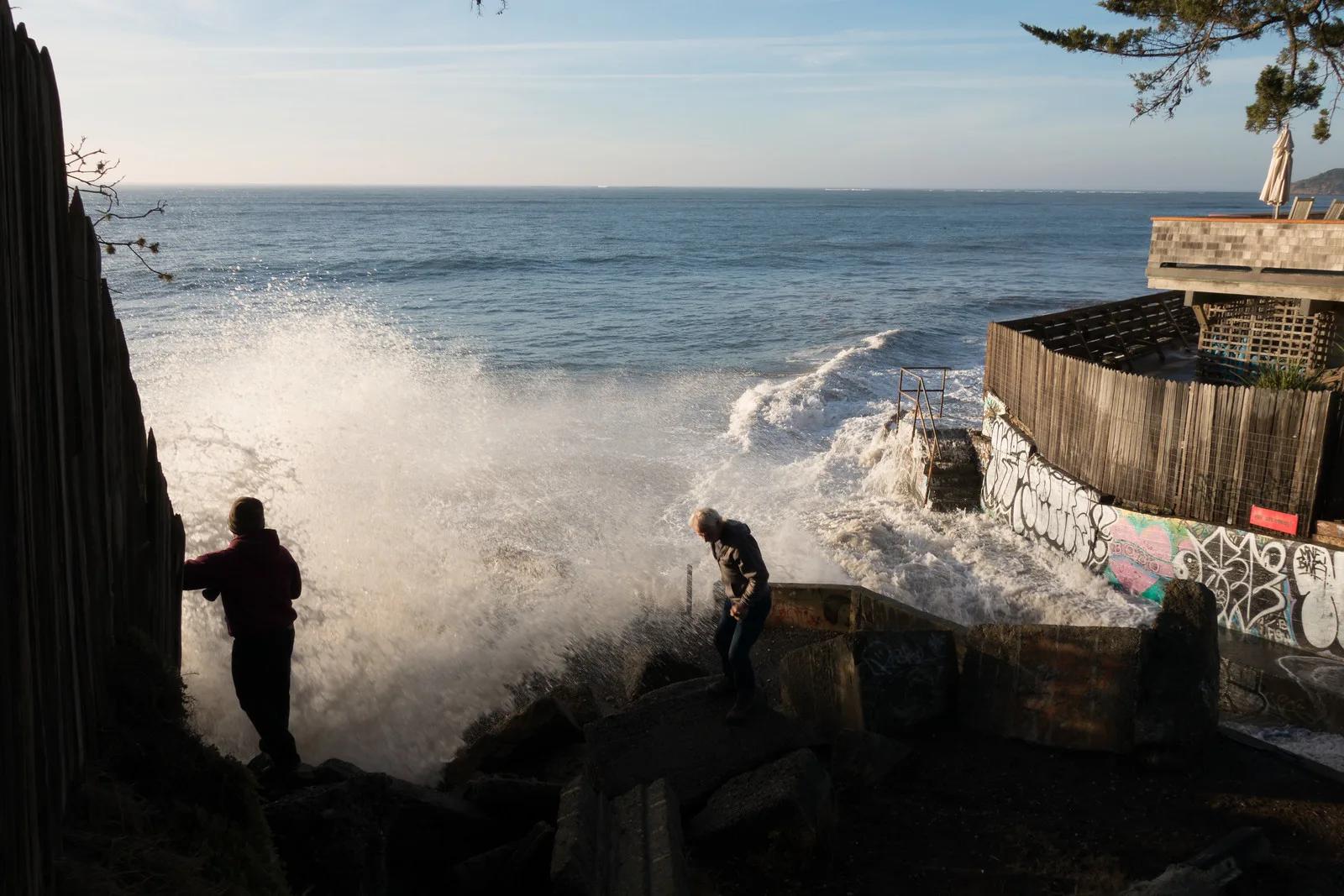
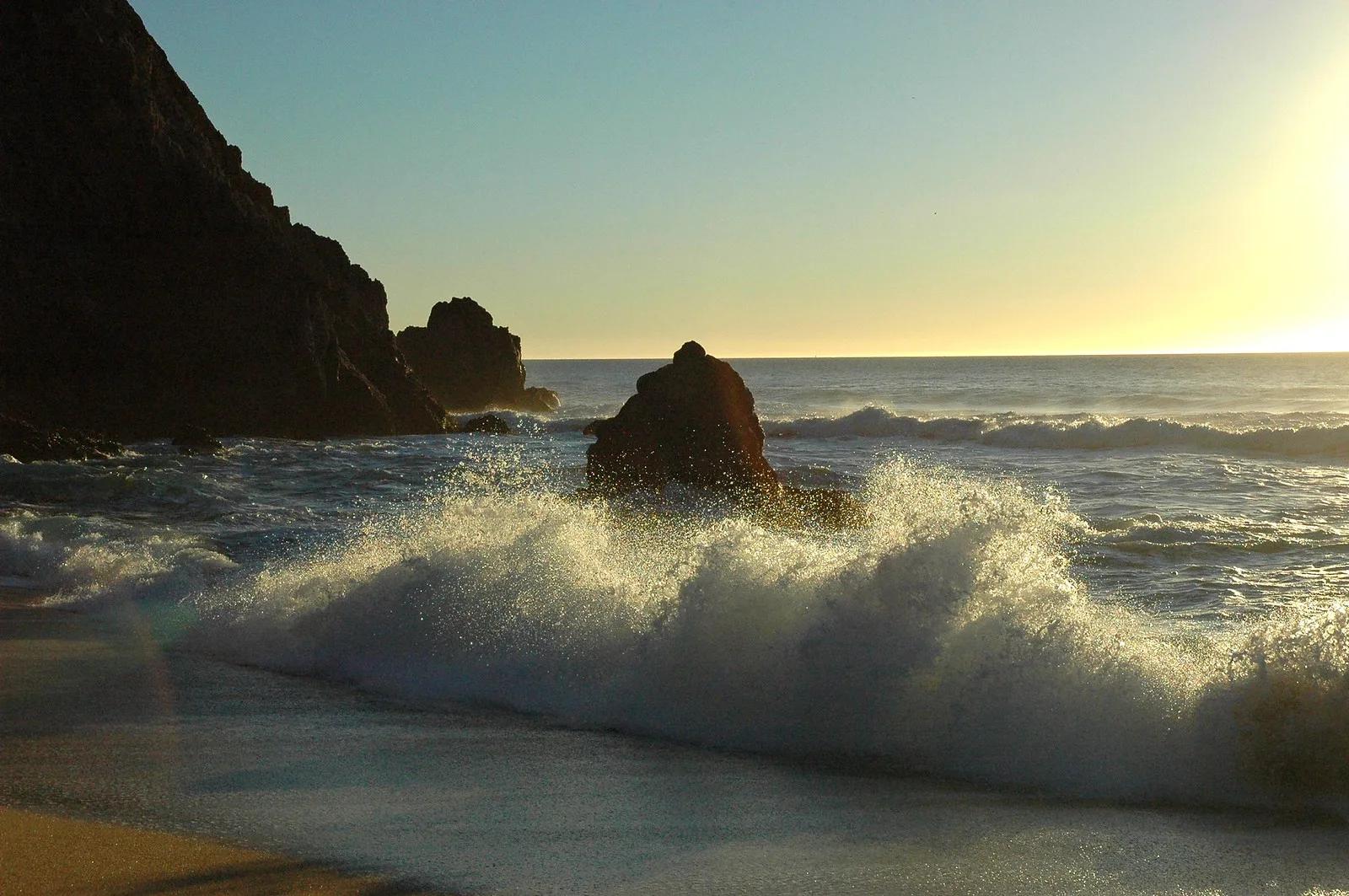
A sneaker wave is a wave that surges much farther up the beach than the ones before it. The NWS says sneaker waves often come after 10 to 20 minutes of small, gentle waves. People see the small ones, sit down too close, and stop watching.
One wave can lift beach logs that weigh hundreds of pounds and roll them over people. The NWS says that for much of the West Coast, sneaker waves kill more people than all other weather hazards combined.
What is a sneaker wave?
When are sneaker waves most likely in California?
Watch for them on long-period groundswell. Those swells come in organized sets with long lulls between them, which is exactly the quiet that fools people. Our swell period guide explains what the seconds mean.
Watch closest at beaches open to the full Pacific: Ocean Beach in San Francisco, Pacifica and Gray Whale Cove. Check the Pacifica surf page and the NWS for a beach hazards statement before you go.

When are sneaker waves most likely in California?
Long period plus long lulls: stay well back from the water.
What a rogue set means for surfers
A buoy's wave height is the average of the tallest third of the waves it measures, as our guide to how waves are measured explains. So some waves always come in bigger than the buoy number. A rogue set can be twice the size of the waves around it.
Do what the NWS says lifeguards and experienced surfers do: watch the ocean for at least 20 minutes before you paddle out. Count the biggest set, not the average one. If the biggest set would scare you, don't paddle out.
Why do they say never turn your back on the ocean?
Because the wave that gets you is the one you don't see. The NWS Wave Safe rules say never turn your back on the waves, even when you walk out of the water.
Stay farther back than you think you need to, and keep off rocks, jetties and logs on big days. If a wave knocks you down and pulls you out, read our rip current guide on how to get back in. No forecast can promise a safe beach.
Face the water, stay high, and keep off rocks and logs.