

Key Takeaways
- Forecast height (Hs) is 60-70% of face height. Multiply the forecast by 1.5-2x to estimate what you'll actually see.
- Three scales exist: significant height (buoy/forecast), face height (what you see, 1.5-2x Hs), and Hawaiian scale (~0.5x face height).
- Calibrate forecast numbers to your local break by comparing predictions to what you actually see over several sessions.
The Short Answer
Surf forecast height is significant wave height (Hs) — the average of the tallest third of waves measured by NDBC and CDIP buoys. Face height (what you actually see at the beach) runs 1.5-2x the forecast number. So a "3-5 ft" forecast means roughly 4.5-10 ft wave faces. Hawaiian scale uses roughly half of face height, adding further confusion. Always ask: which scale is being used?
The Short Answer
The Three Wave Measurement Scales
</>Embed this figure
<iframe src="https://www.quiversurf.app/embed/learn/wave-height-reference" width="100%" height="570" style="border:0;max-width:720px" title="Quiver surf science figure" loading="lazy"></iframe>Significant wave height (Hs): Used by NOAA, WaveWatch III, and most forecast models. It's a statistical measure from buoys — the mean of the highest third of waves over a 20-minute sampling window. This is what you see on Quiver and most forecasting apps.
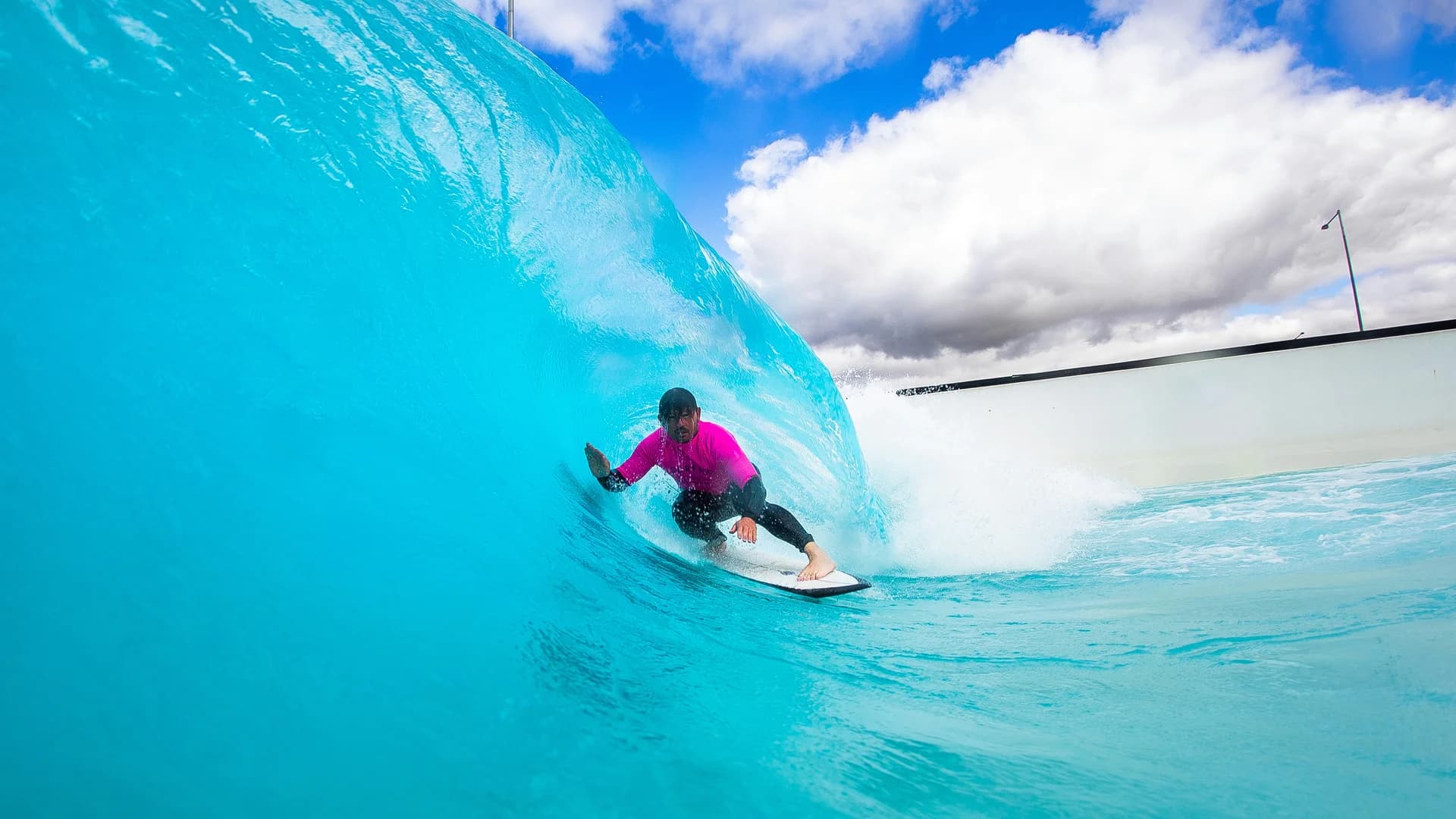
Face height: What surfers actually see standing on the beach. A 3-foot Hs reading from a CDIP buoy translates to roughly 4.5-6 foot faces, depending on the break's bathymetry. Sandy beach breaks tend toward the higher multiplier; deep-water reefs toward the lower.
Hawaiian scale: Used in Hawaii and by some old-school surfers. Roughly half of face height (or close to Hs). A "6-foot Hawaiian" wave has a 10-12 foot face. If someone in Hawaii says "it's 4 feet," prepare for 8-foot faces.
Three scales exist: significant height (buoy/forecast), face height (what you see, 1.5-2x Hs), and Hawaiian scale (~0.5x face height).
What This Means for Your Session
When Quiver shows "4 ft at 14 sec," expect 6-8 foot faces at most beach breaks. Beginners comfortable in 3-foot faces should look for forecasts of 1.5-2 ft Hs. Don't compare numbers across apps without checking their measurement convention — Surfline, Quiver, and Windguru may use different scales or conversions. The best calibration: surf your local break at a known forecast, compare what you see, and build your personal conversion factor. After 10 sessions, you'll know that "3 feet on Quiver" means exactly what at your spot.