

Key Takeaways
- Swell period (seconds between waves) is the best wave quality indicator: under 9 seconds means local chop, over 12 seconds means powerful distant-storm energy.
- Swell period is the time in seconds between consecutive wave crests passing a point.
- Short-period swells (5-9 sec) come from local wind and create mushy, quick-breaking waves that are close together.
- Long-period swells (12+ sec) come from distant storms, travel thousands of miles, and create organized, peeling waves.
- A smaller swell with longer period (12+ sec) produces better waves than a bigger swell with short period (6 sec) because it means organized distant energy.
- Swell period indicates distance from source: 6-sec means nearby wind, 12-sec means 500+ miles away, 16-sec means thousands of miles away.
- Check period on your forecast: 9-12 sec is medium quality, 12+ sec is good, below 9 sec means mushy local chop.
- Every break has a preferred period: reef breaks often work best at 12+ seconds, beach breaks work across ranges, sandbars shift with swell frequency.
The Short Answer
</>Embed this figure
<iframe src="https://www.quiversurf.app/embed/learn/swell-period-morph" width="100%" height="520" style="border:0;max-width:720px" title="Quiver surf science figure" loading="lazy"></iframe>Swell period is the time in seconds between consecutive wave crests passing a fixed point, typically measured by NDBC and CDIP buoys. It's the single best indicator of wave quality on any forecast. Waves with periods under 9 seconds come from local wind and break mushy and chaotic. Waves with periods above 12 seconds come from distant storms — like North Pacific or Southern Ocean systems — and break clean, powerful, and organized. A 3-foot swell at 14 seconds at Rincon will always outperform a 6-foot swell at 6 seconds. Check period on every forecast.
What Swell Period Actually Is
Period is the gap between waves — count the seconds between crests passing a buoy. A 6-second period means waves every 6 seconds. A 14-second period means 14 seconds between waves. Unlike height or wavelength, period doesn't change with water depth. A 14-second swell stays 14 seconds from the deep ocean all the way to shore, making it the most reliable quality signal on any forecast.

What Swell Period Actually Is
Swell period is the time in seconds between consecutive wave crests passing a point.
Short Period (5-9 seconds): Local Wind and Chop
Short-period swells come from local wind hitting the water near your coast. Waves are close together, weaker, and chaotic — energy scattered across directions and frequencies. In the water, they feel mushy and quick. Waves don't stand up as you paddle in; they collapse fast with a steep takeoff but little face. You'll get plenty of opportunities but fewer quality rides. Common on calm days after overnight wind, they're not necessarily bad — just softer and more forgiving of technique.
Long Period (12+ seconds): Distant Storms
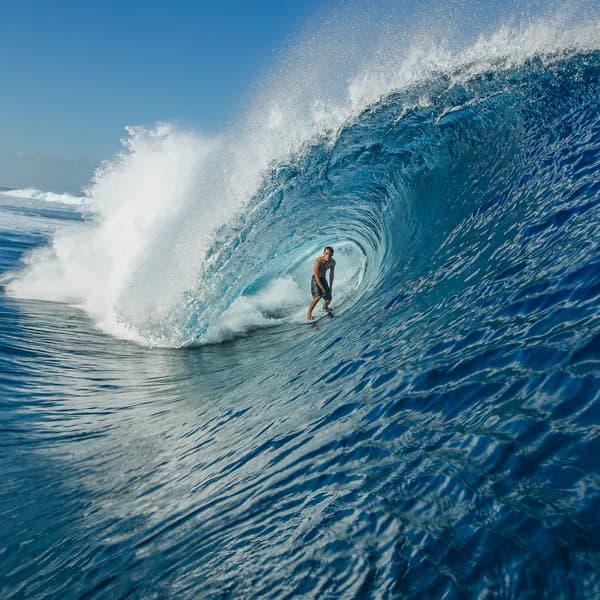
Long-period swells come from storms thousands of miles away. A 14-second swell travels roughly 25 mph through deep water, crossing entire ocean basins over days. Short-period energy gets stripped away by friction along the way, leaving only organized, powerful energy behind. In the lineup, long-period waves stand up slower, peel longer, and maintain power through the break. You'll catch fewer waves but ride cleaner lines — that's why most surfers live for long-period days.
Long Period (12+ seconds): Distant Storms
Long-period swells (12+ sec) come from distant storms, travel thousands of miles, and create organized, peeling waves.
Why Period Matters More Than Height
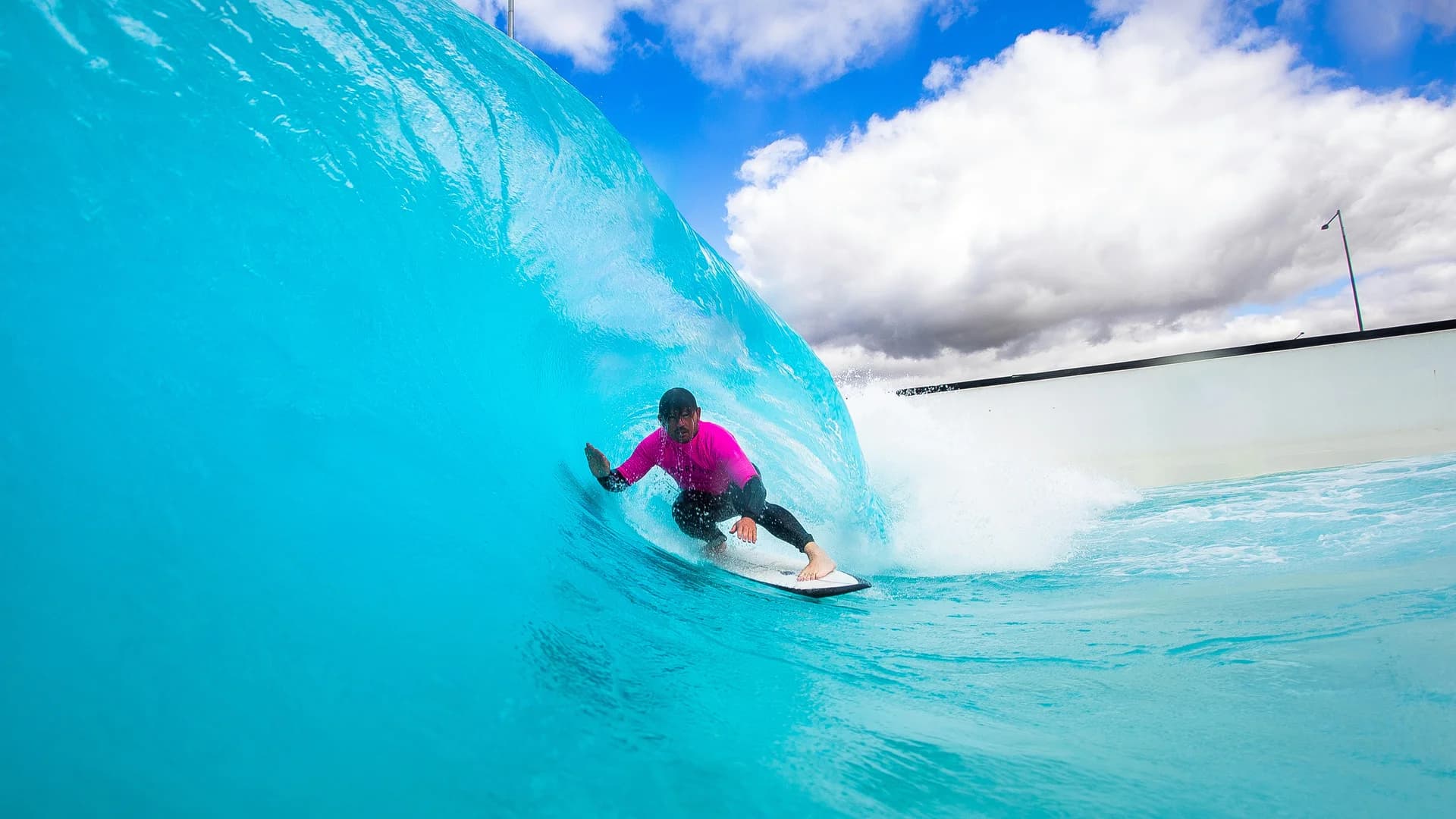
Height tells you scale. Period tells you quality. A 2-foot swell at 16 seconds will be more fun than a 4-foot swell at 6 seconds — the first means clean, organized distant energy; the second means mushy chop that collapses fast. This is why a beach break at 3 feet and 14 seconds will have packed lineups while the same beach at 4 feet and 7 seconds sits empty. Locals know. Period is the invisible metric that separates a real session from a blown-out day.
Why Period Matters More Than Height
Period and Distance: The Fetch Law
Period tells you how far away the storm was. A 6-second swell was generated within 100 miles. An 8-second swell, 200-500 miles. A 12-second swell, 500-1500 miles. A 16-second swell often crossed an entire ocean basin — Southern Hemisphere storms reaching California, for example. Long periods require either massive wind speed or enormous fetch (the distance wind blows uninterrupted over open water). When you see 14+ seconds on the forecast, a serious storm got organized enough to push energy across an ocean.
Swell period indicates distance from source: 6-sec means nearby wind, 12-sec means 500+ miles away, 16-sec means thousands of miles away.
Reading Period on Your Forecast
Forecasts show period as a single number — "4 feet at 14 seconds" — or split into primary and secondary components. Focus on the primary (dominant) period. Quick guide: below 9 seconds is short period (local wind, mushy). 9-12 seconds is medium (decent, some local influence). Above 12 seconds is long period (quality, distant origin). If you see "3 feet at 14 sec + 2 feet at 7 sec," you've got ground swell mixed with local wind — the 14-second component is the one that'll peel.

Reading Period on Your Forecast
How Your Break's Bathymetry Interacts with Period
Every break has a period sweet spot. Reef breaks tend to prefer 12+ second periods because fixed underwater structure channels organized energy into clean lines. Beach breaks are more forgiving across the range, but sandbars shift based on what swells they receive — winter ground swell reshapes bars differently than summer wind chop. Learn your break's preferred period by surfing it across different forecasts and noting which swells produce the best shape. That local knowledge is worth more than any forecasting skill.
Every break has a preferred period: reef breaks often work best at 12+ seconds, beach breaks work across ranges, sandbars shift with swell frequency.