Key Takeaways
- Best beginner sessions have small consistent waves (1-3 feet), long period (12+ sec), offshore wind, and mid-tide.
- Start on 1-3 foot face height (0.5-2 feet on the forecast), which gives you safe, repeatable waves for practicing.
- Long-period swells (12+ sec) break slower and more predictably, giving beginners time to set up and recover between waves.
- Offshore wind holds up waves and slows breaks, making them easier to catch and control. Early morning (before heating) has the best offshore window.
- Mid-tide on a sandy beach creates the most forgiving, consistent waves because the bar is balanced and waves slow down gradually.
- Beginners progress faster in less crowded sessions: choose weekday mornings, smaller swells, and lesser-known spots over famous beaches.
- Use forecasts to match four conditions: height under 3 feet, period 12+ sec, offshore wind, and mid-tide. Plan sessions around these windows.
The Ideal Beginner Session
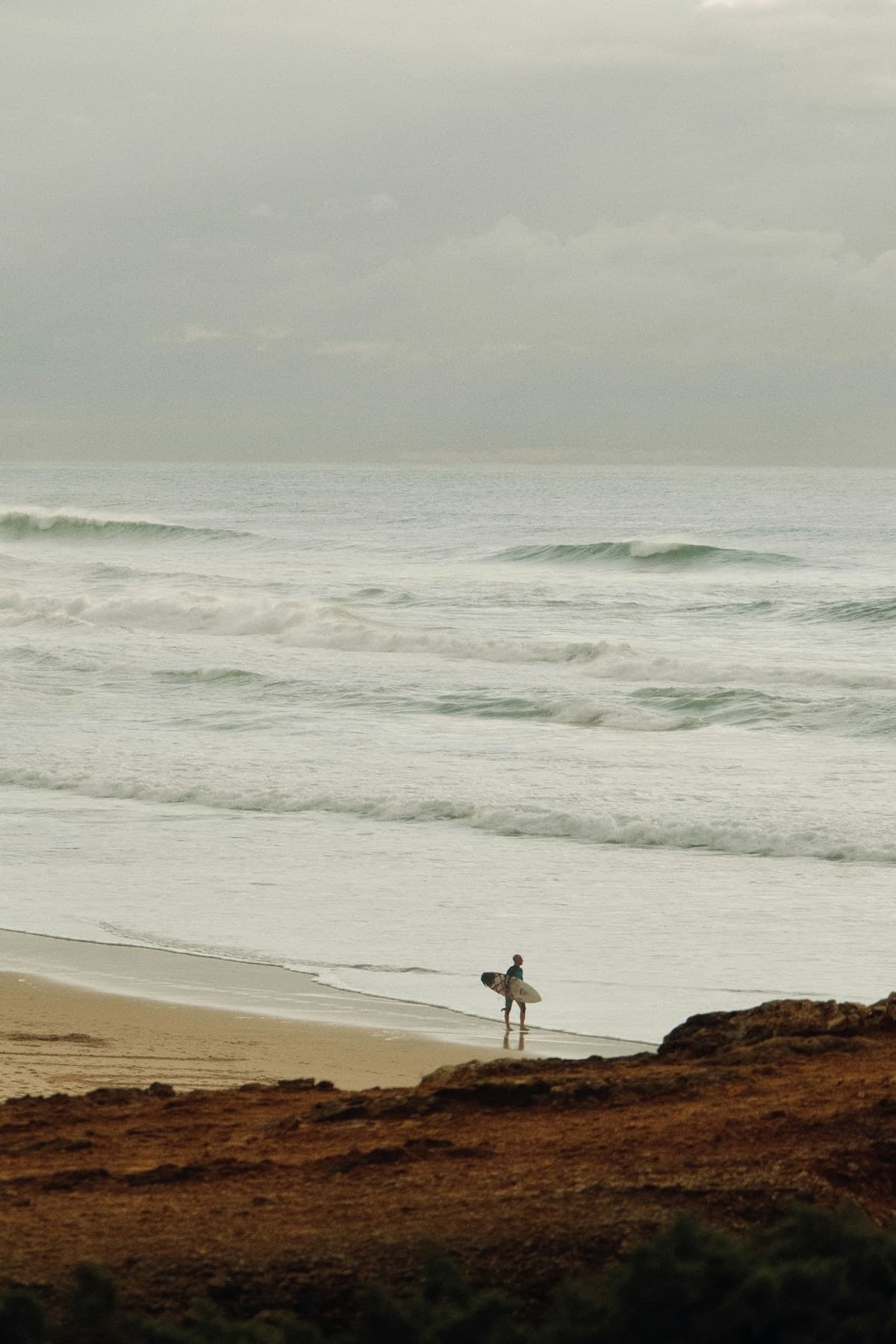
You don't need big waves — you need repeatable waves. The best beginner session has small consistent surf, long period, light offshore wind, and mid-tide over sand. That combo gives you soft, predictable waves breaking in the same spot. You'll catch 10+ waves, build muscle memory, and not get worked. A 2-foot swell at 14 seconds in offshore wind will teach you more than a 6-foot day with onshore chop. Your local beach probably serves this up 1-2 times a week if you know what to look for.
The Ideal Beginner Session
Wave Height: 1-3 Feet (Face Height) Is Ideal
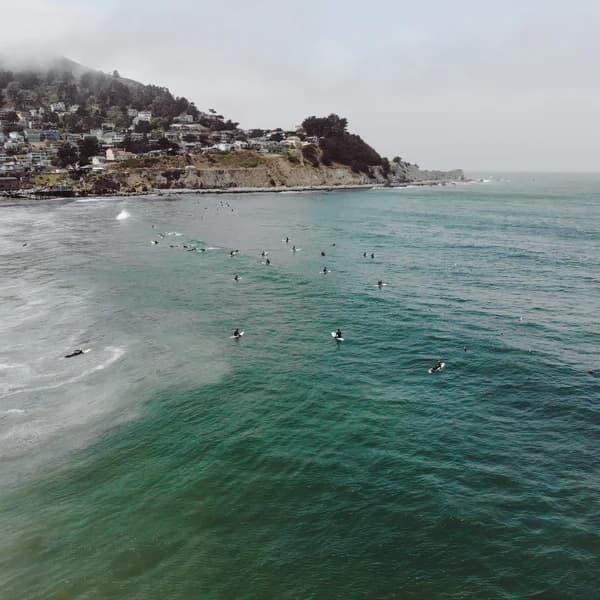
1-3 foot face height is the sweet spot — roughly 0.5-2 feet significant height on a forecast. Learning to pop up takes 100+ reps, and small waves let you practice safely without getting worked. If a forecast says 2 feet, expect 3-4 foot faces (significant height is 60-70% of face height). That's borderline — still okay with long period and offshore wind. Above 4 feet significant (6+ foot faces) is intermediate territory. Simple rule: if you can't duck-dive confidently, it's too big.
Wave Height: 1-3 Feet (Face Height) Is Ideal
Start on 1-3 foot face height (0.5-2 feet on the forecast), which gives you safe, repeatable waves for practicing.
Swell Period: Why Longer Period Is Actually Easier
Long-period waves break slower and more predictably — the opposite of what most beginners expect. A 14-second period gives you 14 seconds between waves to paddle back out and regroup. A 6-second period means constant chaos. Long-period swells also stand up slower, giving you more time to pop up and set your line. A 16-second ground swell at 2 feet feels way more approachable than a 6-second wind swell at 3 feet. If your forecast shows 12+ seconds, that's your best learning window.
Wind: Offshore Early Morning Is Best
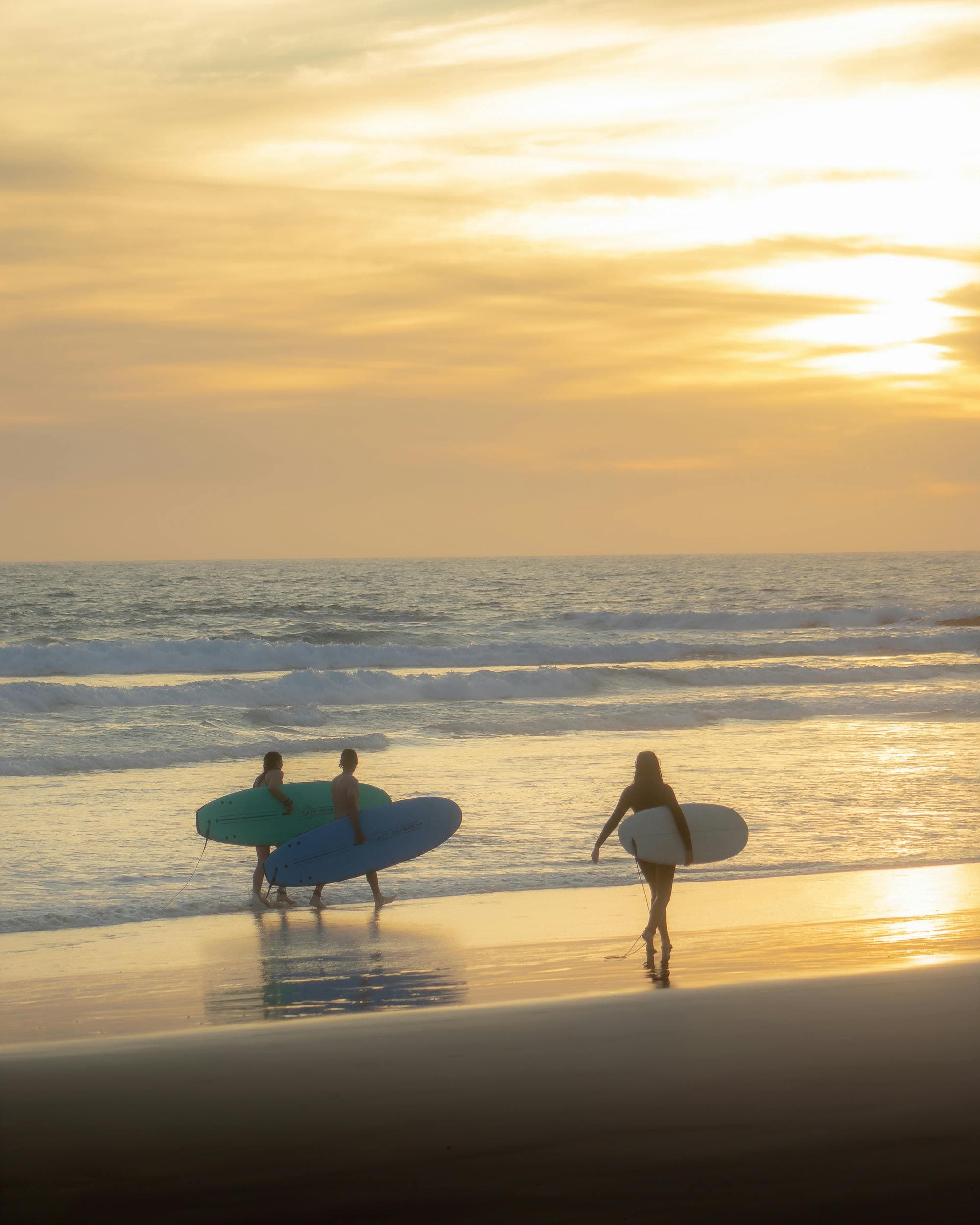
Offshore wind holds up the wave face and slows the break — easier pop-ups, easier control. Early morning is almost always offshore because land cools overnight, pulling wind from shore to sea. By noon, heating reverses it to onshore. That's why every surfer wakes up at dawn. If the forecast shows offshore until 10 AM, be in the water by 7. Even 5 knots offshore helps; 10+ knots offshore is excellent. Onshore wind makes the same waves unrideable for beginners — pick a different day.
Wind: Offshore Early Morning Is Best
Offshore wind holds up waves and slows breaks, making them easier to catch and control. Early morning (before heating) has the best offshore window.
Tide: Mid-Tide on Sand Is Sweet Spot
Mid-tide on a sandy bottom is the most forgiving setup. Low tide exposes bars and creates hollow, fast sections — not beginner-friendly. High tide floods everything out, making it slow and mushy. Mid-tide (roughly 3-4 hours after low) creates balanced bar shapes where waves peel smoothly. Sand is also softer than reef when you fall. Learn your break's best tide window by surfing different tides and noting where peaks form.
Crowd Management: When to Avoid the Pack
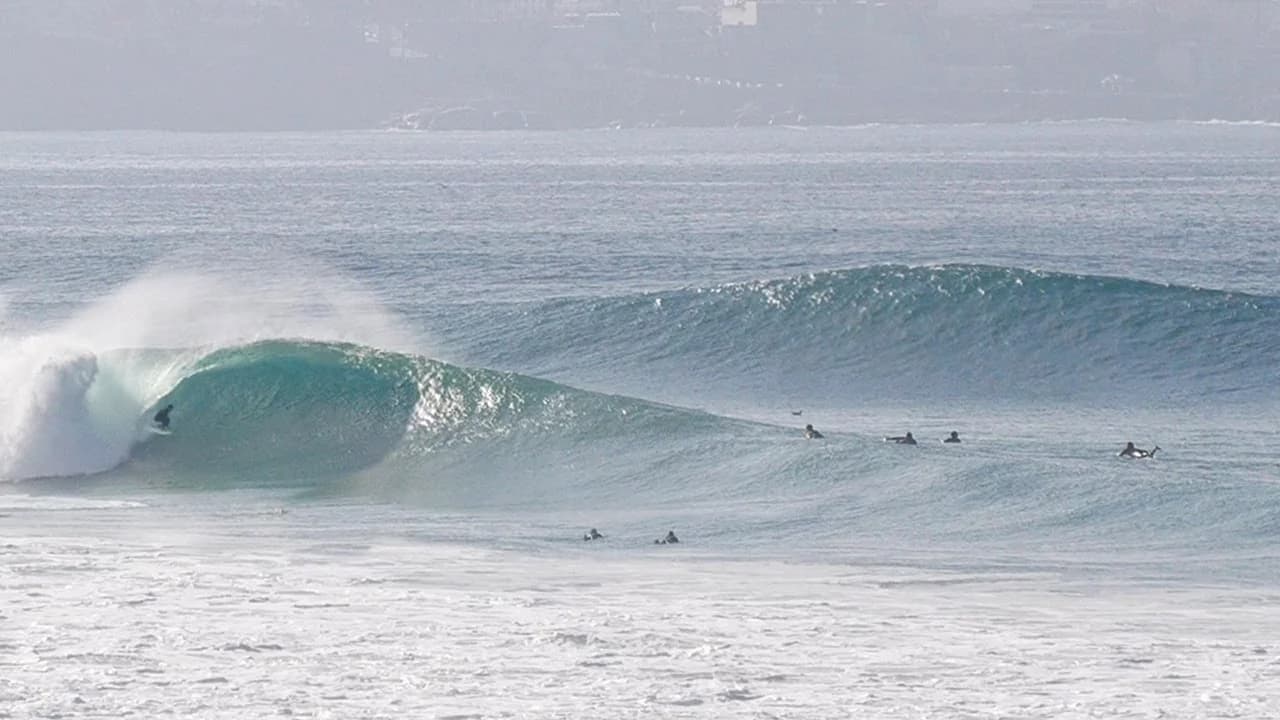
You'll progress faster in empty lineups than fighting 50 people for waves at a famous spot. Crowded sessions mean fewer waves, more collisions, and less room to make mistakes. Go on weekday mornings before work. Target smaller swells that don't draw the crowd. Hit lesser-known beaches with the same conditions and more space. You don't need the best wave — you need a forgiving wave with room to paddle. After 6 months of consistent practice in smaller crowds, you'll be ready for the lineups.
Crowd Management: When to Avoid the Pack
Beginners progress faster in less crowded sessions: choose weekday mornings, smaller swells, and lesser-known spots over famous beaches.
Using a Forecast to Plan Your Beginner Session
The checklist: (1) height under 3 feet significant, (2) period 12+ seconds, (3) offshore wind under 10 knots, (4) mid-tide timing. When a forecast matches all four, that's your day. Example: Tuesday 6 AM, 1.5 feet at 14 seconds, 8 knots offshore, high tide 7:30 AM — perfect beginner session. Don't paddle randomly hoping conditions work out. Use Quiver to scan the next 7 days and block the best windows. Within a few weeks, you'll spot the pattern at your break.