
Key Takeaways
- Rip currents pull you out, not under. Swim parallel to shore to escape. Never fight the current — it's faster than you.
- Spot rips from shore: darker calm water between breaking waves, debris flowing seaward, gaps in the whitewater. Rips form at sandbar low points.
- Watch the water 5 minutes before entering. If caught: stay calm, swim parallel to shore, float if exhausted. Surf near lifeguards.
The Short Answer
A rip current is a narrow channel of water flowing from shore back out to sea at 1-8 feet per second — faster than an Olympic swimmer. It pulls you OUT, not under. To escape: don't fight it. Swim parallel to shore (perpendicular to the rip) until you're out of the current, then swim back in with the breaking waves. If exhausted, float and signal for help. NOAA and the United States Lifesaving Association report roughly 100 rip current drownings per year in the US — more than hurricanes, tornadoes, and lightning combined.

The Short Answer
How to Spot a Rip Current From Shore
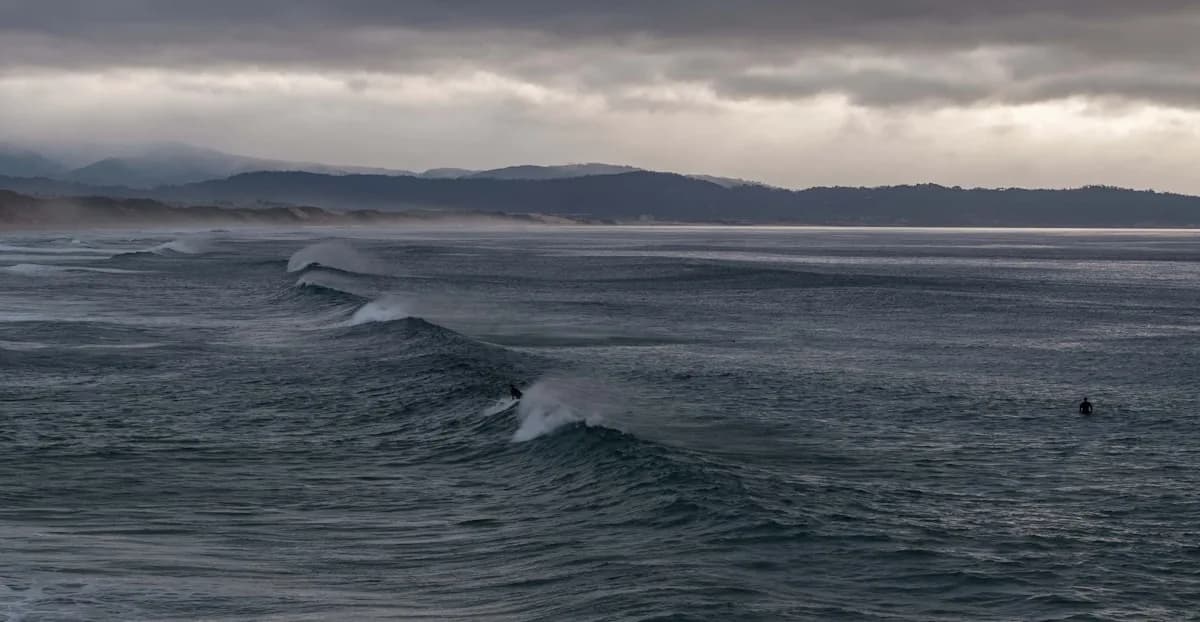
Rip currents are visible once you know what to look for: a channel of darker, calmer water between areas of breaking whitewater. The calm patch isn't safe — it's the outflow channel. Other signs: choppy, discolored water moving seaward, foam or debris flowing steadily offshore, and a gap in the breaking waves where the rip carves through the sandbar.
Rips form where water pushed onshore by waves finds a low point in the sandbar to flow back out. They're most common at beach breaks near jetties, piers, and between sandbars. They intensify with larger surf and stronger longshore currents. A beach with uniform waves breaking everywhere is generally safer than one with obvious channels and gaps in the whitewater — those gaps are rips.
Spot rips from shore: darker calm water between breaking waves, debris flowing seaward, gaps in the whitewater. Rips form at sandbar low points.
What This Means for Your Session
Before every session, spend 5 minutes watching the water from an elevated position. Look for channels, gaps in whitewater, and debris movement. Experienced surfers actually use rip currents as a free ride to paddle out — the outflow carries you past the break zone without fighting whitewater. But beginners should avoid them entirely until comfortable in the ocean.
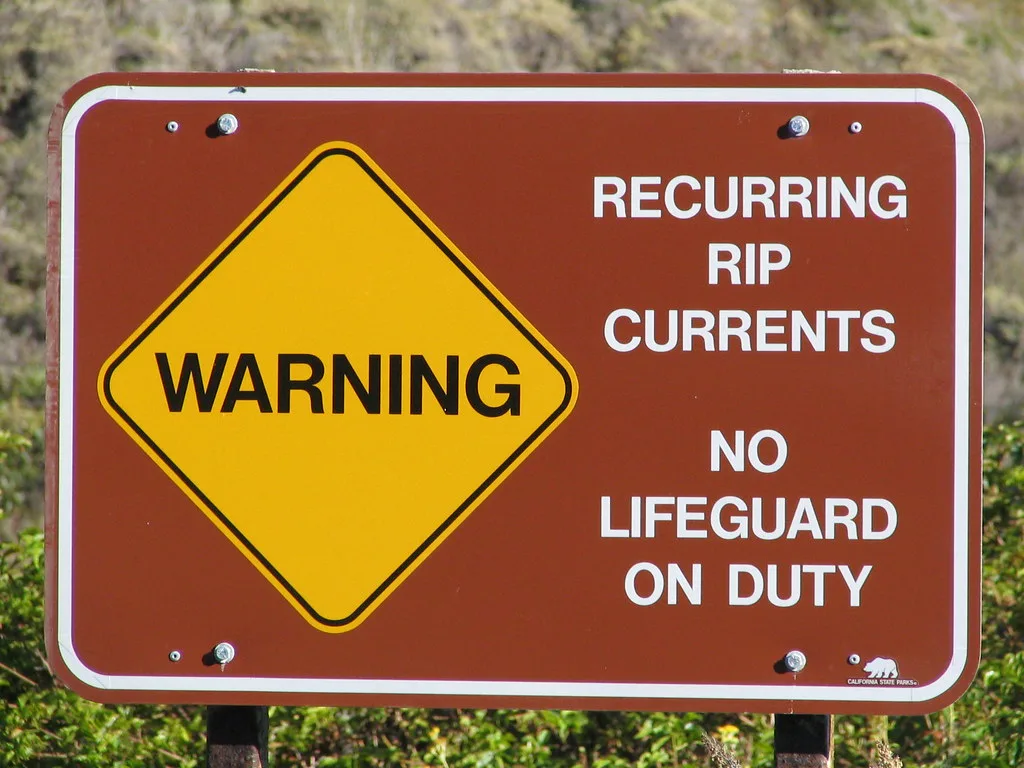
If caught in a rip: stay calm (panic causes drowning, not the current). Don't try to swim directly to shore against the flow. Swim parallel to the beach for 50-100 feet until you feel the pull weaken, then angle toward shore. If you can't swim out of it, float on your back — most rips dissipate 100-200 yards offshore. Wave your arms to signal lifeguards. Surf near lifeguard stations, especially as a beginner.