
Key Takeaways
- Break type explains the bottom and wave geometry, not whether today's conditions suit your ability.
- Sand moves, reef stays comparatively fixed, and points organize swell along a coastline—but each type has wide variation.
- Choose by controllable conditions and a clear route, not by assuming every sandy break is beginner-friendly.
- Watch multiple sets for fixed takeoffs, shifting peaks, channels, and the coastline path before assigning a label or choosing a route.
- Tide changes depth and connection differently at every bottom; local observation beats a break-type shortcut.
- Trade moving peaks against fixed-bottom exposure, crowd concentration, ride length, paddle distance, and current.
- Ask the questions unique to the bottom, then apply the same condition, crowd, and ability checks to every break.
The Short Answer
A beach break breaks over sand that can shift after storms and strong currents. A reef break breaks over relatively fixed rock or coral. A point break peels along a headland or other projecting feature, often over rock, reef, or sand. The labels describe bottom and coastline geometry; they do not assign skill level or safety.
Use the type to predict what may stay fixed: takeoff location, peeling direction, paddle channel, and tide sensitivity. Then check the actual swell, water depth, current, crowd, entry, and posted conditions. A small reef can be approachable with local guidance while a powerful beach break can be unsuitable for a beginner.
The Short Answer
How Each Break Type Works
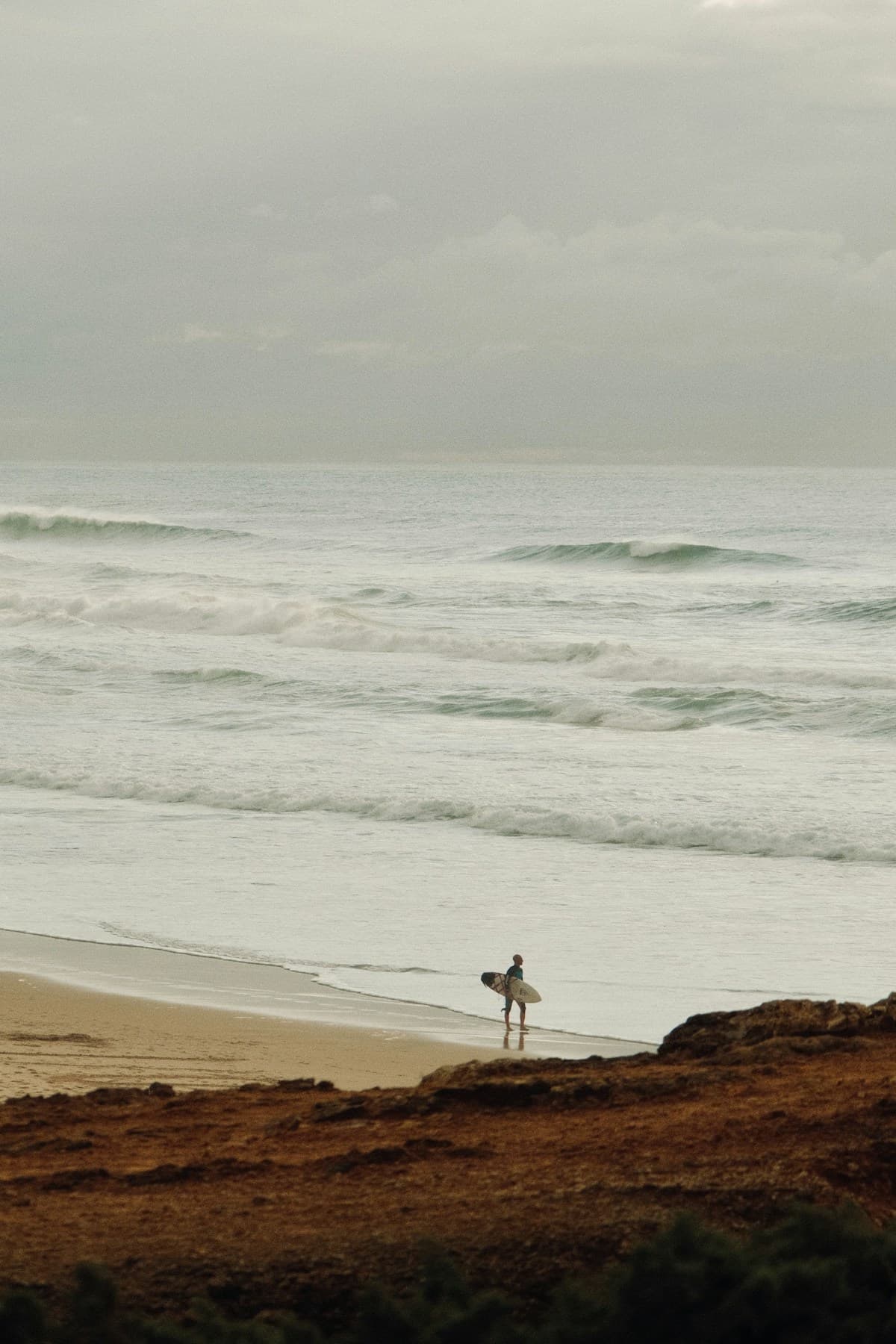
Beach breaks depend on bars, troughs, and channels made from sand. One peak may offer a clean left today and close out after the next storm. The moving bottom rewards fresh observation rather than old directions.
Reef breaks use a more fixed underwater contour, so the takeoff and peeling line are often repeatable. The reef may be flat, sharp, deep, shallow, exposed at low tide, or covered by enough water to be invisible; the category alone cannot tell you the consequence of a fall.
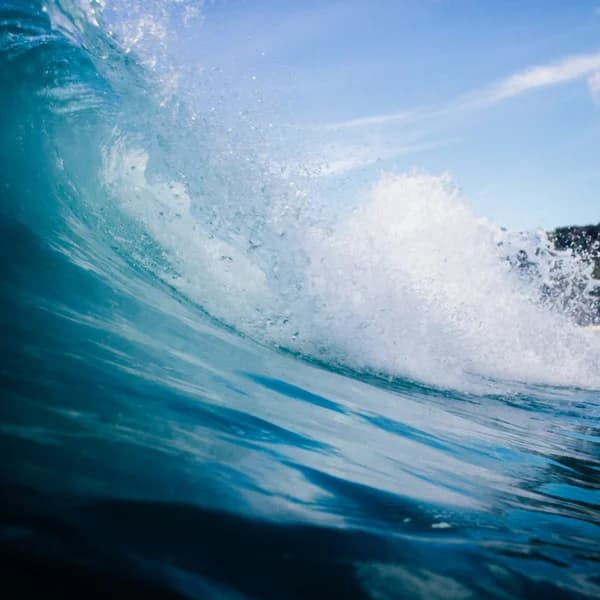
Point breaks form as swell bends and breaks along a point. Some have long one-direction walls and a protected channel, while others section, run fast, or carry strong current down the line. A point can also be a reef break because “point” describes the coastline and “reef” describes the bottom.
Sand moves, reef stays comparatively fixed, and points organize swell along a coastline—but each type has wide variation.
What This Means for Your Session
For a learner, prioritize a designated lesson area with small broken waves, room between people, a manageable current, straightforward entry, and lifeguard or instructor guidance. That is often a sandy beach, but “beach break” does not guarantee those traits. Shorebreak, rip channels, heavy closeouts, and moving peaks can make a sandy beach a poor choice.
Before trying a point or reef, be able to turn the board quickly, catch unbroken waves in a chosen direction, exit a ride on command, and follow a defined paddle route without crossing riders. Ask a reputable local instructor about suitable tide and swell windows. Do not use months surfed as the deciding threshold; control in comparable conditions matters more.
Identify the Break Type From Shore
At a beach break, look for several peaks, gaps in whitewater, and surfers shifting position as the bars focus different sets. Darker or calmer channels can mark deeper water and current, not a safe swimming lane. At a reef, repeated waves usually begin near the same landmark and follow a similar line. Exposed rock or coral at low tide is an obvious clue, but a submerged reef may show no surface marker.
At a point, watch whether sets wrap around a headland and peel along the shoreline. Follow several riders from takeoff to exit and note where they paddle back. Mixed breaks are common: a point may feed into a beach section, or a jetty may stabilize sand like a short point.
Watch multiple sets for fixed takeoffs, shifting peaks, channels, and the coastline path before assigning a label or choosing a route.
Expect Tide to Affect Each Bottom Differently
On a beach break, a rising or falling tide changes water depth over every bar. A peak may soften, improve briefly, then stop breaking. On a reef, tide can change the clearance over rock or coral and the speed at which a wave stands up. On a point, tide may affect the takeoff, inside connection, entry rocks, and current separately.
Do not import a rule such as “reef equals high tide.” Some reefs become fuller at high tide; others stop breaking or develop backwash. Use a documented local range, observe the bottom at a lower tide from shore, and ask lifeguards or experienced local guidance. If you cannot verify depth, entry, and exit, choose another location.
Compare the Trade-Offs That Affect a Session
Beach breaks offer multiple peaks and often more room to spread out, but the correct takeoff can move between sets and the paddle-out may lack a channel. Reefs offer a repeatable line for learning a wave, yet fixed takeoffs concentrate crowds and mistakes occur over a fixed bottom. Points can deliver long rides and a recognizable route, but long rides also mean long paddles, current, and a tight priority rotation.
Decide which uncertainty you can manage. If your wave reading is developing, a clearly marked mellow takeoff may help—but only if depth, crowd, and entry fit. If crowd stress is the main issue, a broad small beach may offer more space even when individual waves are less predictable.
Trade moving peaks against fixed-bottom exposure, crowd concentration, ride length, paddle distance, and current.
Use a Break-Specific Go/No-Go Checklist
For a beach break, ask: where are the rip channels, is shorebreak blocking entry, are peaks closing out, and is there enough space? For a reef, ask: what is the actual depth, where are the entry and exit, does the tide expose hazards, and can you follow the fixed line? For a point, ask: which swell angle connects, how strong is the down-line current, where does the ride end, and how will you return?
For every type, check lifeguard instructions, posted closures, wind, tide, swell, water quality, crowd, and your ability to control the board. A “good” break type can still be the wrong call today. When any critical answer is unknown, watch longer, ask qualified local guidance, or do not enter.