

Key Takeaways
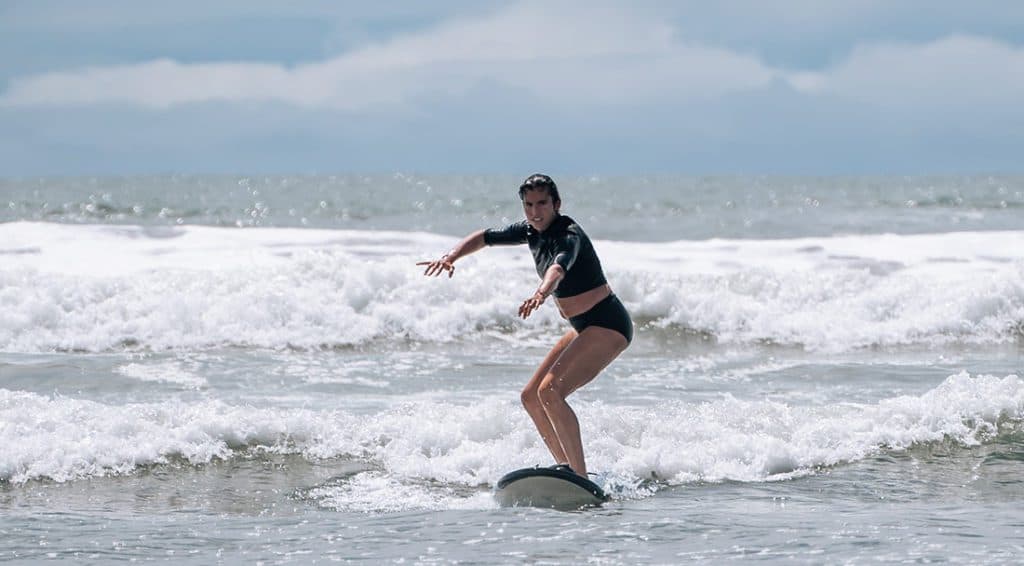
- Tamarack, the seawall stretch, and Ponto are the usual learner choices, but the day's size and current decide whether any of them fits.
- Tamarack's open-beach whitewater suits first sessions on small days; keep clear of the jetties and the peaks they shape.
- The seawall stretch spreads people across many peaks, but high tide shrinks the beach and short-period swell brings closeouts.
- Ponto and South Carlsbad offer lots of sand to spread out on, but busy main peaks and big tide swings mean you should pick your corner carefully.
- Look for small surf with gaps between sets and light wind, usually in the morning, and let what you see from shore overrule the forecast.
- Wear a wetsuit sized for today's water, practice near a staffed tower away from rips and jetties, and stay out until at least 72 hours after the last rain.
- Stay in the whitewater, give the main peaks room, and switch to a nearby beach when Carlsbad is too big or crowded.
The Short Answer
Most beginners in Carlsbad learn at Tamarack, the stretch of Carlsbad State Beach along the seawall, or Ponto at the south end of South Carlsbad State Beach. All three are sandy beach breaks with room to spread out, and all three can be too big, too fast, or too crowded on the wrong day. Pick the day first, using the live call on Quiver's Carlsbad beginner page, then watch several sets from shore before you paddle out.
Tamarack: The Usual First Session
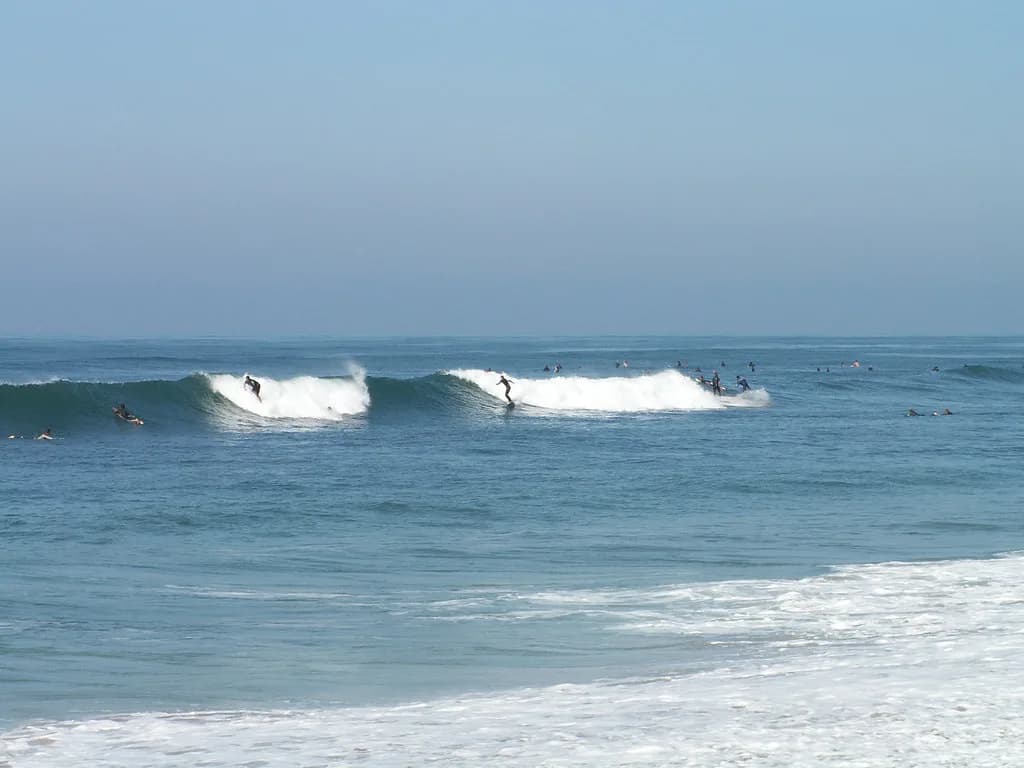
Tamarack, at the foot of Tamarack Avenue near the Agua Hedionda Lagoon outlet, is where many Carlsbad surf schools set up. It has a parking lot right above the sand, a wide beach for practicing pop-ups, and inside whitewater that suits a soft-top on small days.
The jetties are the catch. They anchor sandbars that can produce faster peaks, and they pull experienced surfers and current toward them. Stay well away from the rocks, practice in the whitewater on the open beach, and leave the jetty peaks alone until you can turn and stop reliably. On days when sets break across the whole beach with no gaps, Tamarack is not a learning spot.
Tamarack: The Usual First Session
Tamarack's open-beach whitewater suits first sessions on small days; keep clear of the jetties and the peaks they shape.
Carlsbad State Beach Along the Seawall
North of Tamarack, Carlsbad State Beach runs along the downtown seawall and walkway. The long, straight shoreline usually has several peaks, so you can move away from a crowded one instead of competing for it. Lower-tide days give you more sand to work with; higher tides can push waves up against the seawall and leave less room to stand and reset.
Like any exposed beach break, it can close out when short-period wind swell stacks up, and the sandbars shift through the year. A sandbar that worked last month may not be there now. Watch where other learners are catching waves and where the current carries them before choosing your patch.
Ponto and South Carlsbad State Beach
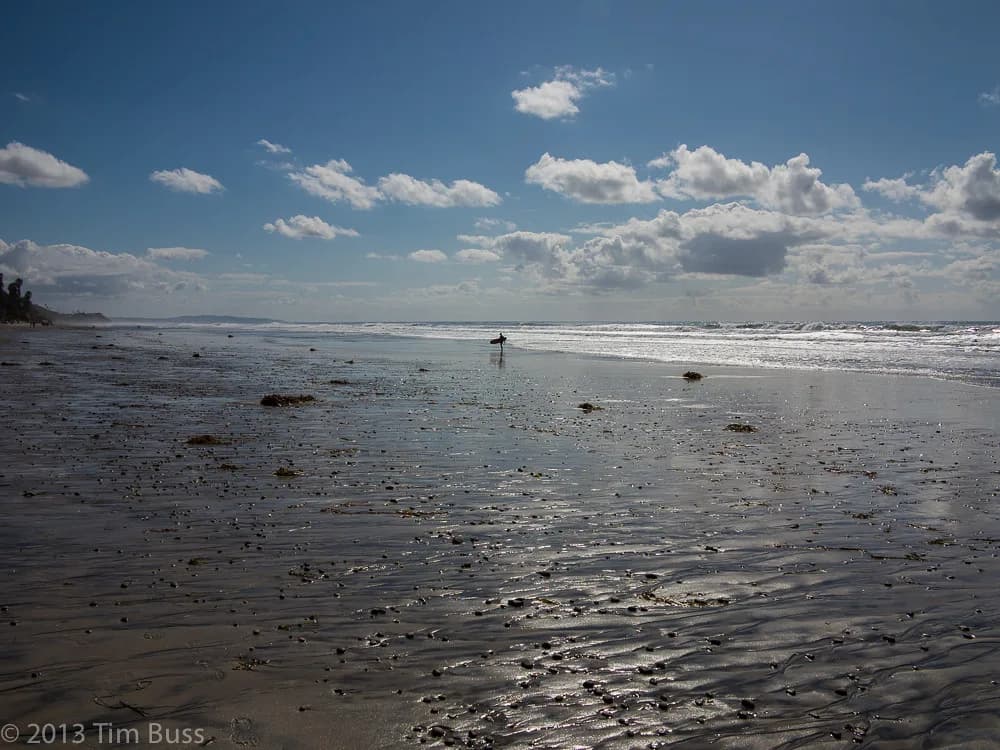
Ponto sits at the south end of South Carlsbad State Beach, near the Batiquitos Lagoon mouth. Between Ponto and the campground stairways to the north there is a long run of sand that often has smaller, gentler corners than the main peaks, plus a state beach day-use lot.
Ponto is also a popular spot with experienced surfers, and the main peaks can be crowded and fast on a good swell. Low tide changes it a lot: on a deep minus tide the beach turns into a wide sand flat and waves can break hard over shallow bars. Check the tide as well as the wave height, and skip the lagoon mouth itself.
Ponto and South Carlsbad State Beach
Ponto and South Carlsbad offer lots of sand to spread out on, but busy main peaks and big tide swings mean you should pick your corner carefully.
What a Beginner Day Looks Like in Carlsbad
Carlsbad faces west and picks up northwest swell in winter and south swell in summer. For learning, look for small surf, roughly waist high or less on the face, with clear gaps between sets. A longer period can make a small number hit harder than it looks, so check period as well as height. Light wind or a light offshore morning keeps the surface smooth; the afternoon sea breeze usually makes it bumpier.
Use the live forecast for the beach you plan to surf and the hourly view on best time to surf in Carlsbad to find the smallest, cleanest window. Then check from shore. If the forecast says small and the beach says otherwise, believe the beach.
Water Temperature, Rip Currents, and Rain
Carlsbad water is cold enough for a wetsuit most of the year, with the coldest water in winter and spring and the warmest in late summer. Check today's reading on Carlsbad water temperature and pick thickness from that, using the wetsuit thickness guide.
Every Carlsbad beach break can form rip currents, especially near the jetties and where sandbars have gaps. Look for darker, calmer channels between breaking waves, ask the lifeguards where to practice, and stay near a staffed tower when one is open. After rain, the County of San Diego issues a general advisory to avoid ocean contact until at least 72 hours after the last rain, and the lagoon mouths carry runoff to the beach. Read surfing after rain before you go.
Wear a wetsuit sized for today's water, practice near a staffed tower away from rips and jetties, and stay out until at least 72 hours after the last rain.
Crowds, Lessons, and Where Else to Look
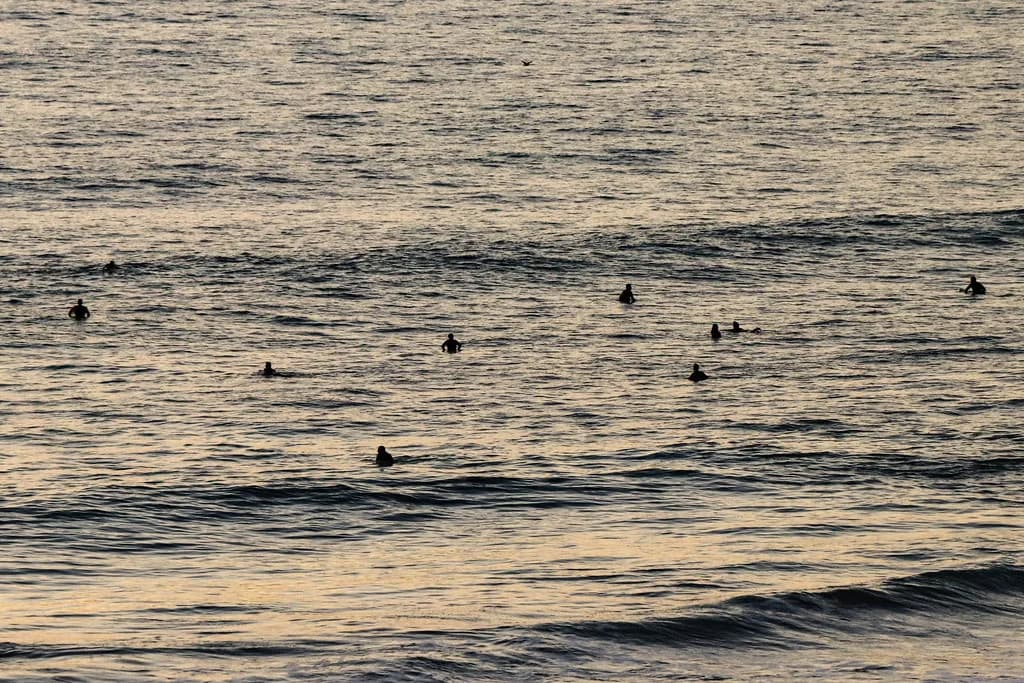
Carlsbad lineups get busy on weekend mornings, especially at Tamarack and Ponto. A lesson is the fastest way to learn where beginners are expected to practice and how to get out of the way. On your own, stay in the whitewater, keep the board beside you rather than between you and the waves, and follow basic surf etiquette: no dropping in and no paddling straight into an established peak.
If Carlsbad is too big or crowded, compare the beginner calls for Oceanside and Encinitas, or the wider San Diego beginner guide. A smaller beach nearby usually beats a bigger one you are not ready for.
Crowds, Lessons, and Where Else to Look