Key Takeaways
- Half a mile out. No binoculars, no rides, just whitewater.
- Pack binoculars, or you watch sets, not surfers.
- Ten parking spaces. On a big swell, arrive early.
- One trail in. No word from the Harbor District, use the bluff.
- Minimum wake, and the patrol commander's directions come first.
- About 14 feet on the SF Bar buoy is Quiver's big-swell line.
- If the ground under you is wet, move higher.
The Short Answer
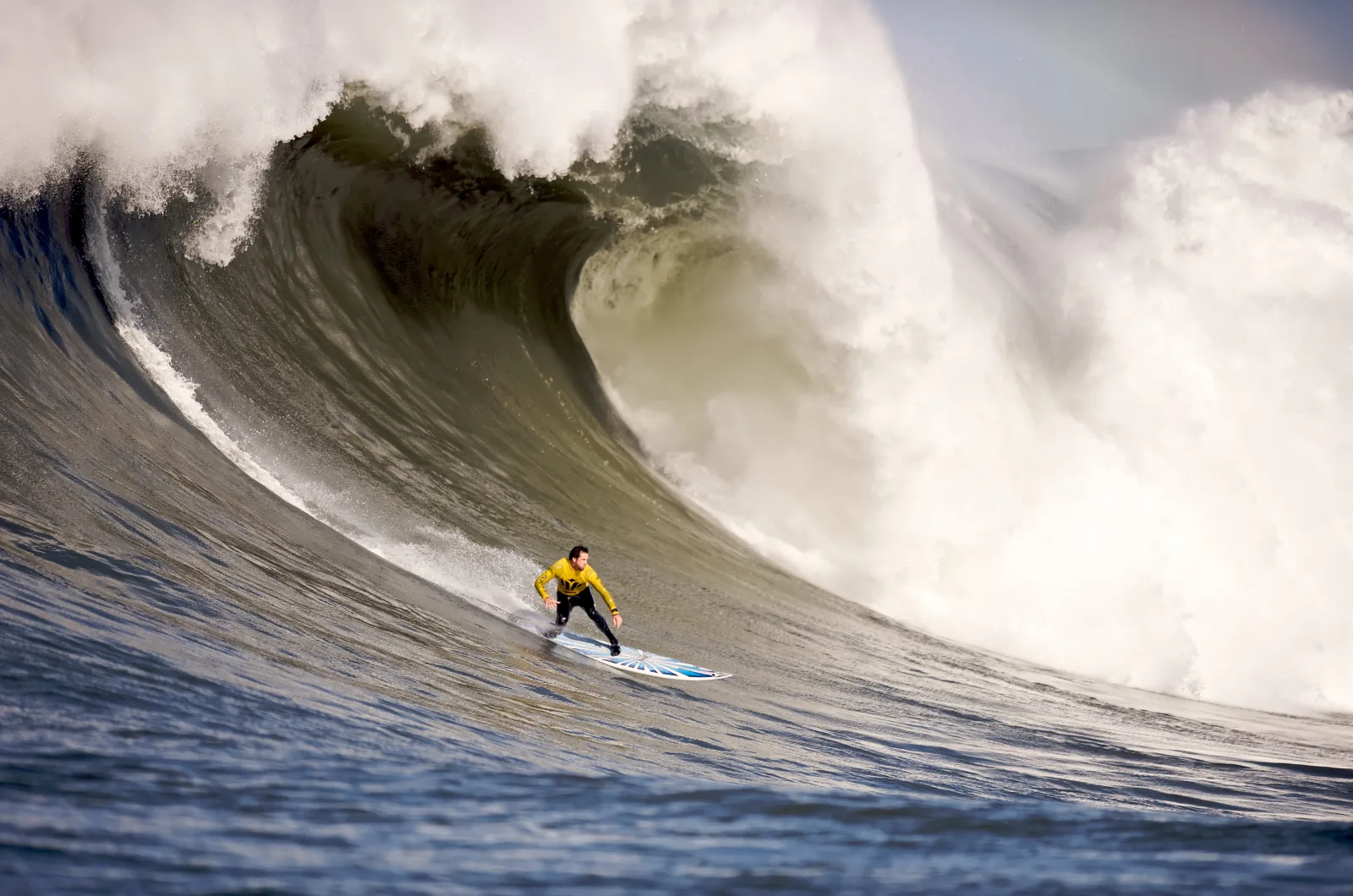
Mavericks breaks about half a mile off Pillar Point, so you watch it from Pillar Point Bluff with binoculars. San Mateo County Parks says the break sits approximately half a mile offshore, due west of the Pillar Point Air Force Tracking station, and is best viewed with binoculars.
The big days come in winter, November through March. Check Mavericks surf today before you drive out to Princeton.
Check it live
This guide is the why. The live page has today's swell, wind and tide.
Mavericks surf today →Can you see Mavericks from shore?
Yes, but small. Visit Half Moon Bay, the local visitor bureau, says that from roughly a half-mile away the surfers will look like ants. You'll see the whitewater and the size of the sets. You won't see faces.
Visit Half Moon Bay says binoculars help, and that the best in-person view is usually from a boat. It names Surfers' Beach and Mavericks Beach as places to stake out a spot.
Pack binoculars, or you watch sets, not surfers.
Where to stand: Pillar Point Bluff
Pillar Point Bluff is a 220-acre San Mateo County park on top of the bluff, with a section of the California Coastal Trail running through it. The county lists a 10-car parking lot on Airport Street. The Jean Lauer Trail links that lot with Bernal Avenue. Dogs are fine on leash.
Ten spaces will not go far on a big swell, so get there early. The county page carries a "Use Caution on Beaches and Bluffs" notice. Stay on the trail and well back from the edge.
Mavericks Beach and the West Trail
The San Mateo County Harbor District calls the West Trail the only access point to Mavericks Beach. It starts at the West Point Avenue parking area.
The district also says erosion has made the trail hazardous for the people on it. Check the Harbor District for the trail's current status before you go. If you can't confirm it, watch from the bluff.
One trail in. No word from the Harbor District, use the bluff.
Watching from a boat
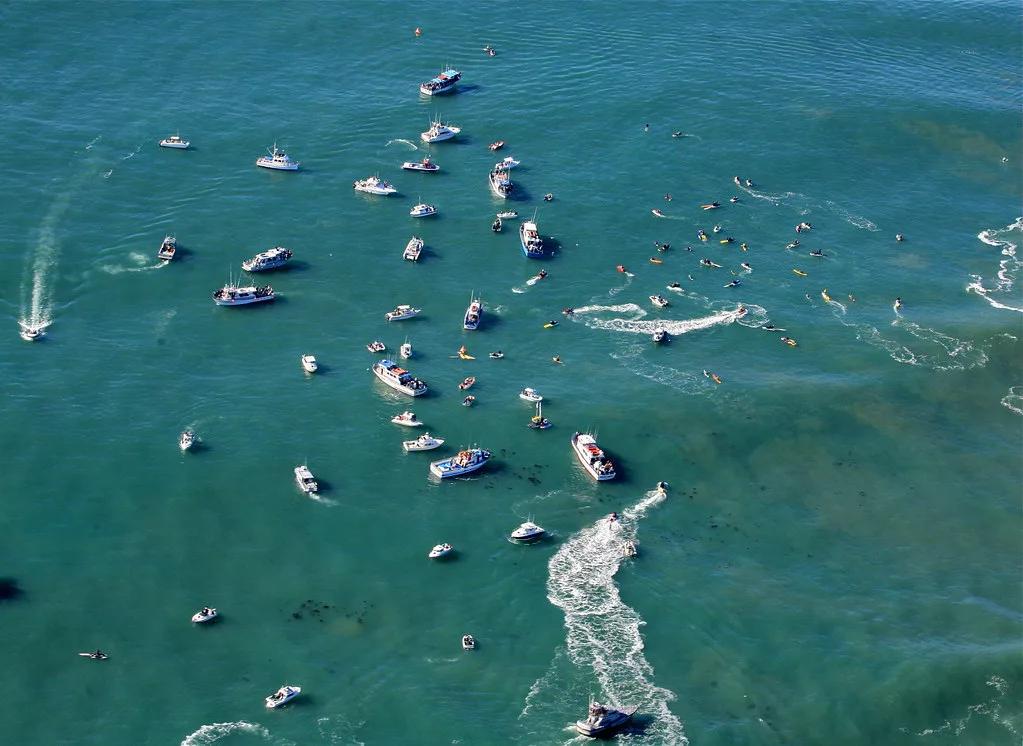
Visit Half Moon Bay says the best in-person viewing is usually from a boat. On contest days the channel beside the break fills with spectator boats and jet skis.
The US Coast Guard sets the rules for that water. Under 33 CFR 100.1106, spectator boats keep a minimum wake and follow the directions of the patrol commander. Go with a skipper who knows Pillar Point Harbor.
Watching from a boat
When does Mavericks break?
In winter, on big swell. Visit Half Moon Bay says the big waves come in the winter months, November through March. The Coast Guard contest window runs November 1 to March 31, and the contest is only held if 15 to 20 foot waves hold for over 24 hours.
Watch the buoys. Quiver's Big Swells card treats the San Francisco Bar buoy as big at about 14 feet of swell. That number is the average of the tallest third of the waves, as our guide to how waves are measured explains, so the biggest sets run larger.
Long-period swell means bigger sets and longer lulls. Our swell period guide covers why. Check the live buoy readings and the best time to surf Half Moon Bay before you go.
About 14 feet on the SF Bar buoy is Quiver's big-swell line.
How to stay safe on a big day
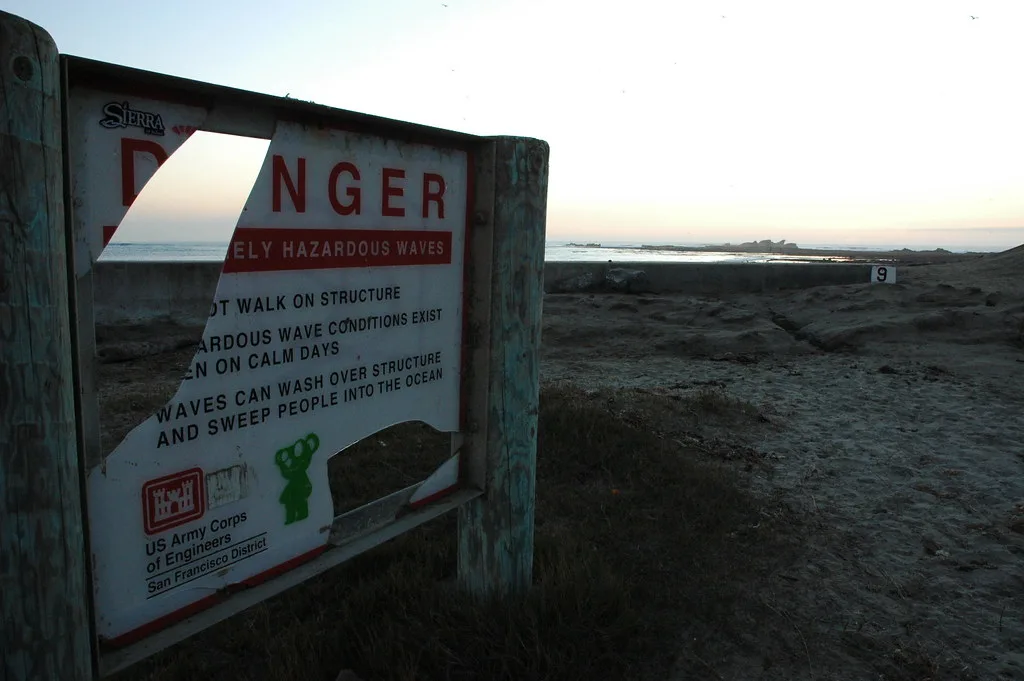
Stay off the jetty, the seawall and the reef. A US Army Corps of Engineers danger sign photographed at Mavericks tells people not to walk on the structure, and says hazardous wave conditions exist even on calm days. Its last line reads: "Waves can wash over structure and sweep people into the ocean."
It has happened here. NBC Bay Area reported that on February 13, 2010, during the contest, two large waves swept spectators off the seawall at about 9 a.m. Thirteen people were injured.
San Mateo County Harbor Patrol asks people to watch the big waves from a safe distance and a dry location. The NWS says to watch the ocean for at least 20 minutes and never turn your back on the waves. Sneaker waves often follow 10 to 20 minutes of small waves, as our rogue wave guide explains.
No forecast can promise a safe beach or bluff. Pick dry ground well above the water.
How to stay safe on a big day