Key Takeaways
- On the shadow line, expect about half the open-coast size.
- Refraction needs a shallow bottom. Diffraction needs a wall or island edge.
- Behind a wall, 14+ seconds leaks in. 8 seconds mostly doesn't.
- Islands and points decide which swells your beach ever sees.
- A gap in a wall sends waves out in arcs, smaller at each side.
- Open coast too big? Try the beach behind the island or wall.
The Short Answer
Wave diffraction is swell spreading sideways into the sheltered water behind an island, jetty or harbor wall. Right on the edge of that shadow, waves run about half the height of the open-ocean swell, and they keep shrinking the deeper into the shadow you go.
That's why Santa Barbara can be knee-high while the open coast north of Point Conception is overhead. See how the sheltered side is running on the Santa Barbara best time to surf page.
Check it live
This guide is the why. The live page has today's swell, wind and tide.
Best time to surf Santa Barbara →What's the difference between diffraction and refraction?
Refraction is swell bending because the bottom gets shallow. The part of the wave in shallow water slows down and the line swings toward it. That's how a point like Rincon lines up a set. Our guide to how swell wraps around a point covers it.
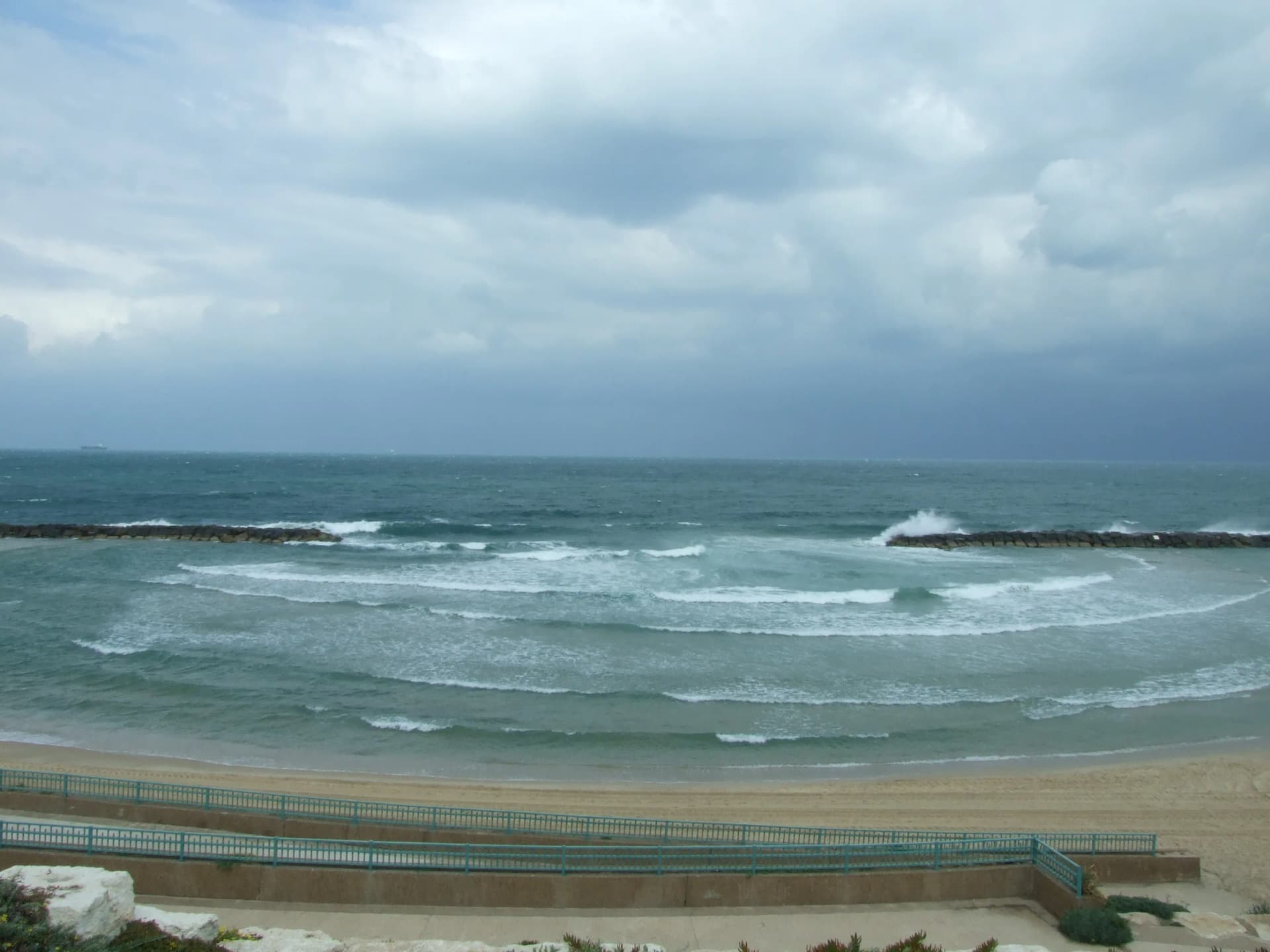
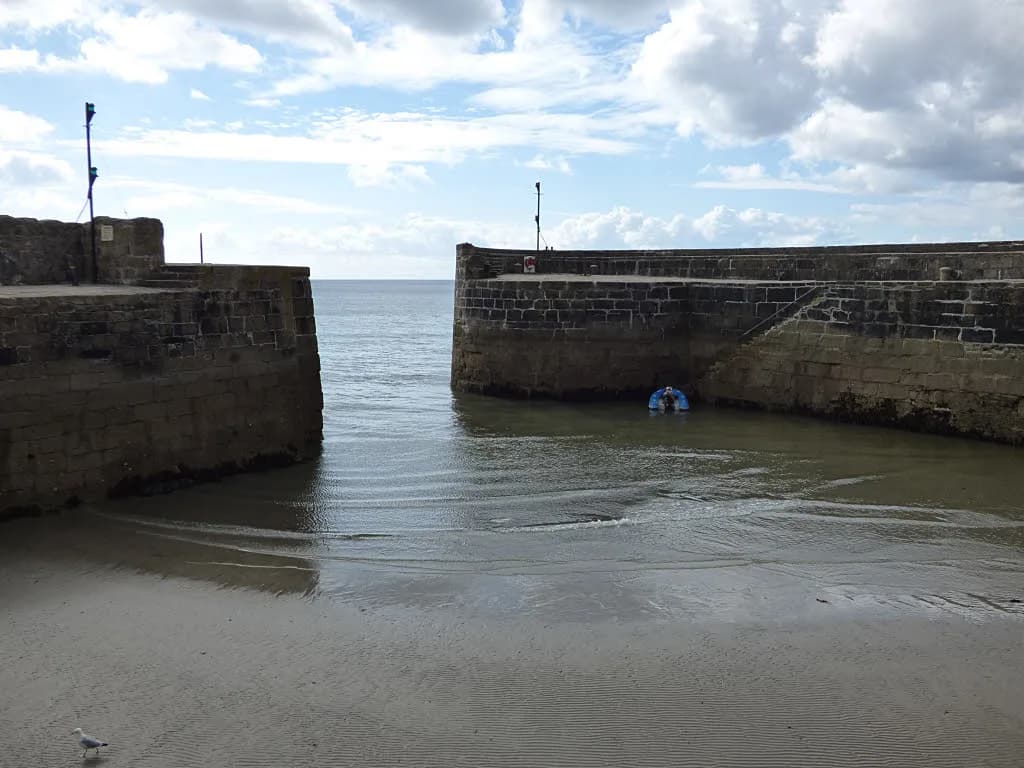
Diffraction doesn't need a shallow bottom. It happens when a wave line hits the end of a wall or an island. The part that gets past the edge leaks sideways into the calm water behind it, fanning out in arcs. Each arc is smaller than the swell that made it, because the same energy is now spread over more coastline.
What's the difference between diffraction and refraction?
Refraction needs a shallow bottom. Diffraction needs a wall or island edge.
Why long-period swell reaches further into a shadow
How far a swell bends into a shadow depends on its wavelength compared with the size of the thing blocking it. In deep water, wavelength in feet is about 5.12 times the period squared. An 8-second windswell is about 330 feet from crest to crest. A 16-second groundswell is about 1,300 feet.
Put a 1,000-foot breakwater in front of both. It's three windswell wavelengths long, so the windswell mostly stops. To the groundswell it's less than one wavelength, so plenty of it leaks around the end. Read the swell period before you trust a sheltered spot.
Which California spots sit in a swell shadow?
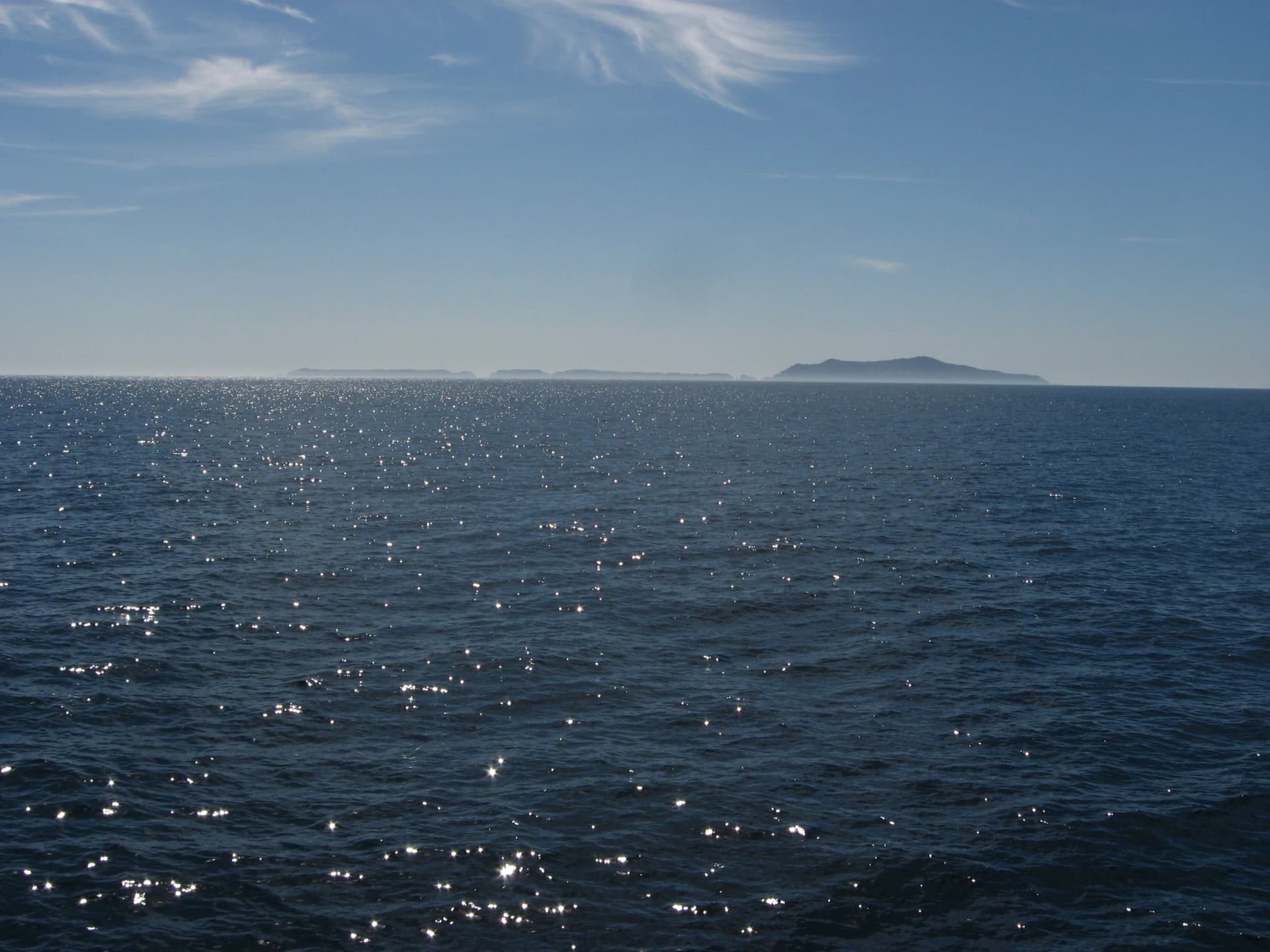
Santa Barbara and Ventura sit behind two blockers: Point Conception to the northwest and the Channel Islands to the south. A northwest swell has to bend past Conception, and a south swell has to squeeze through the gaps between Anacapa, Santa Cruz and Santa Rosa islands. What arrives is smaller and pulsier than the buoy outside. CDIP, the Scripps buoy network, runs a Southern California swell model that maps exactly this island blocking.
That's why Rincon wants a big west swell with long period, and why a beginner day at Ventura often lines up with a bigger swell everywhere else. Check Rincon's best windows before you drive.
Which California spots sit in a swell shadow?
Islands and points decide which swells your beach ever sees.
What happens behind a harbor breakwater?
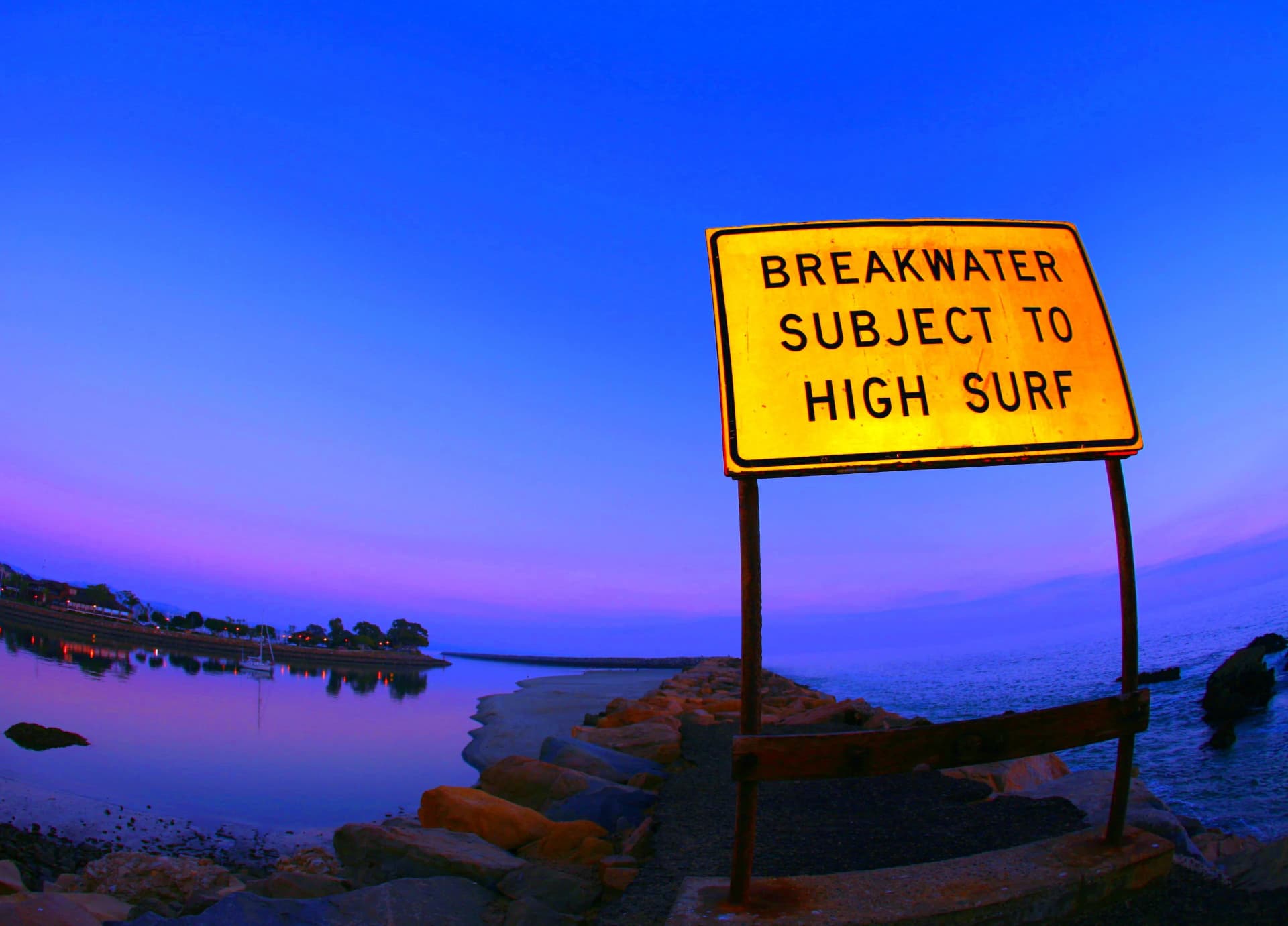
A breakwater is built to make a shadow. Long Beach has had almost no surf since its federal breakwater went in during the 1940s. Dana Point Harbor's breakwater, built in the late 1960s, ended Killer Dana, a well-known right point.
Where a wall has a gap, the gap acts like a new source. Waves pass through and spread out in half-circles, smallest at the sides. That's the pattern in the photo at the top of this page. Doheny, just east of the harbor, sits partly in that shadow and is a learner beach today. See Dana Point's best times and the Dana Point beginner guide.
What happens behind a harbor breakwater?
How to use a swell shadow on a big day
When the open coast is double overhead, the spot behind the island, point or wall is often the only rideable one. Waves there are smaller and slower to build, and they arrive in longer gaps between sets.
Harbor mouths are different. They carry boat traffic and strong tidal current, and you shouldn't surf a harbor entrance. If you're not sure about a sheltered spot, don't paddle out. Watch from shore for 10 minutes first and count the sets. Our guide to swell direction shows how to match an angle to your beach, and the Santa Barbara water temperature tells you what to wear.
Open coast too big? Try the beach behind the island or wall.