
Key Takeaways
- Refraction is swell bending into shallower water at a headland — that's how points get long, peeling waves while the open coast next door looks flat.
- Waves slow down in shallow water. The part of the swell line that hits shallow first lags, the line bends toward it, and longer-period swells bend more.
- Each point has a swell window — a direction and period range it can refract. Outside that window, the same swell that lights up the beach next door does nothing here.
- At a point, direction beats height. A small swell from the right direction outperforms a big swell from the wrong one because only the right direction can wrap.
- Check direction and period before height. If the forecast direction sits inside your point's window and the period is 12+ seconds, then the height starts to matter.
The Short Answer
Swell wraps around a point because waves slow down in shallow water near the headland while the rest of the wave keeps moving fast over deeper water. The line bends toward the slower side and refocuses along the point, peeling down the coast as a long, organized wall. That bending is called refraction. It's why a 4-foot west swell at 16 seconds can light up Rincon while the open beach next door barely notices, and why a bigger swell from the wrong direction can pass right by.
What Refraction Actually Is
</>Embed this figure
<iframe src="https://www.quiversurf.app/embed/learn/swell-period-morph" width="100%" height="520" style="border:0;max-width:720px" title="Quiver surf science figure" loading="lazy"></iframe>Refraction is wave bending. When a swell line enters shallower water, the part of the wave touching the shallow side slows down. The part still in deep water keeps moving at full speed. The whole line pivots toward the slow side, like a marching band turning around a corner where the inside row takes shorter steps.
This isn't a metaphor. Wave speed in shallow water depends on depth — once depth drops below roughly half the wavelength, the bottom starts dragging on the wave. A 14-second swell has a wavelength of about 1,000 feet in deep water, so it starts feeling the bottom at around 500 feet of depth. A 7-second swell only has a wavelength of about 250 feet, so it doesn't start bending until it's much closer to shore. Longer-period swells refract more. That single fact controls almost everything about how a point fires.
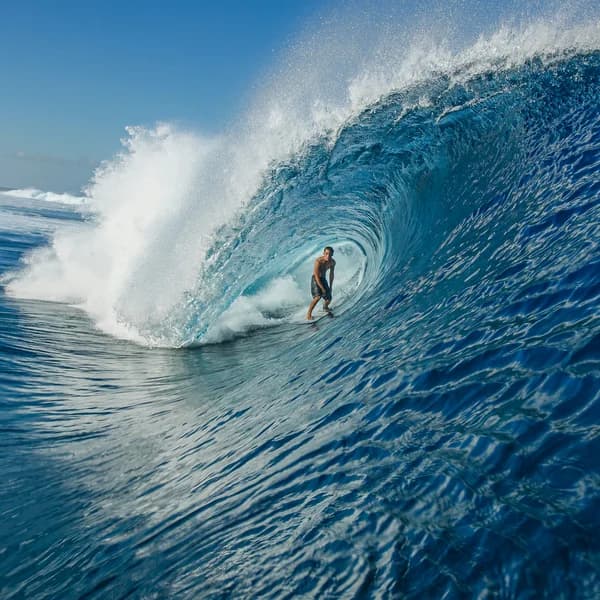
At a headland — a chunk of land that sticks out into the ocean — the swell line hits the shallow shelf around the point first. That part slows. The rest of the line keeps charging. The result is a wave that bends inward and peels along the point's contour instead of just slamming straight into the cliff.
What Refraction Actually Is
Waves slow down in shallow water. The part of the swell line that hits shallow first lags, the line bends toward it, and longer-period swells bend more.
How a Point Filters Swells
Every point break has a swell window — a range of directions and periods it can actually wrap. Outside that window, the swell either gets blocked by land upstream, refracts the wrong way, or arrives with too much shoulder-angle to break clean.
Rincon, on California's central coast, faces roughly southwest. It sits in the shadow of Point Conception for north and northwest swells. A 6-foot NW swell at 10 seconds gets cut off by the headlands above and arrives shrunken and confused. A 4-foot west or WNW swell at 16 seconds, though, has enough wavelength to bend around Conception, refract along the cobblestones, and run the full length of the cove. Locals know the rule: long-period west is gold; short-period north is nothing.
Trestles, further south, has a different geometry. The reef sits in a south-facing zone with a wide-open swell window for southern hemisphere groundswells. A 3-foot south swell at 17 seconds can produce shoulder-high, peeling rides because the period is long enough to refract cleanly across the reef. The same beach a hundred yards north misses most of that energy because there's no reef to focus it.
The pattern repeats up and down the coast. Each point has a preferred direction, a preferred period range, and a frustrating list of conditions where the open beach is going off and the point is asleep. The geometry of the headland and the seafloor in front of it determine the window. No model fixes that — you learn it by surfing the spot or asking locals.
Why Direction Matters More Than Height at a Point
At a beach break, height and period dominate. At a point, direction comes first. A point that's blocked from a swell direction will turn a 6-foot day into a 1-foot day no matter how long the period is. Conversely, a point sitting wide open to a swell direction will magnify a 2-foot reading at the buoy into a chest-high wall on the right tide.
This is also why point breaks reward forecast literacy. The forecast might say "4 feet at 14 seconds." That's the open-coast reading. At your point, the actual wave depends on:
- Whether the swell direction sits inside the point's window (otherwise no amount of energy reaches the lineup),
- Whether the period is long enough to refract around the headland (short-period swells stall out before they bend),
- Whether the seafloor in front of the point is shaped to focus or scatter the energy as it arrives.
That's why surfers at Rincon will skip a 6-foot NW day and drive an hour for a 3-foot west day. The bigger swell can't get in. The smaller one can, and refraction does the rest.
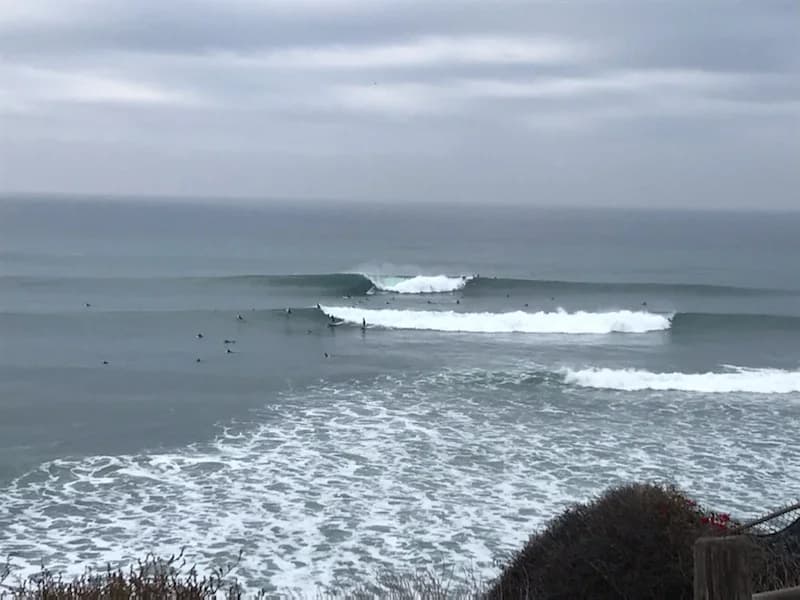
Why Direction Matters More Than Height at a Point
At a point, direction beats height. A small swell from the right direction outperforms a big swell from the wrong one because only the right direction can wrap.
How to Read Refraction From a Forecast
You don't need to model refraction. You need three pieces of information:
1. The forecast swell direction, in degrees. 270 is straight west. 180 is straight south. 315 is northwest. Most surf forecasts give this as a number or a compass heading.
2. Your point's swell window. This is local knowledge. Rincon: roughly 240–280. Trestles: roughly 180–220. Malibu: roughly 180–230. If the forecast direction is outside that range, the point is closed for that swell, period.
3. The forecast period. If the period is under 10 seconds, the swell may not refract well even if the direction is correct. Points generally need 12+ seconds to wrap properly, and the best days at most points are 14–18 second ground swells.
Run those three filters before you check height. If all three line up, then check the buoy reading and the wind. If even one fails — wrong direction, short period — you're better off at a beach break that doesn't depend on refraction. The Quiver forecast for your beach already does this filtering for you, but the underlying logic is something every point surfer eventually learns by hand.
Quick gut check: at a point, never trust raw height alone. Always read direction and period first. The number on the forecast is the open-ocean signal. The wave you actually paddle out to is what survives the bend.