

Key Takeaways
- Water temperature affects your body and equipment choices, not the height of the waves.
- Choose thermal protection from the water temperature, then account for wind, air temperature, sun, and personal tolerance.
- Cold water can disrupt breathing immediately; enter deliberately and end the session if control does not return.
- End the session when cold begins reducing coordination or judgment, not when the clock says you are done.
- Separate temperature from swell: land-ocean temperature gradients can drive local wind, and that wind can affect surf quality.
- Use current water temperature and wetsuit guidance as part of a full conditions check, then adjust for your body and gear.
The Short Answer
Water temperature does not change swell height or make waves larger. It changes the surfer's experience: what thermal protection to wear, how long a session stays comfortable, and how quickly cold shock or fatigue can reduce breathing control, coordination, and judgment. Check the water temperature separately from wave height, period, wind, and tide before deciding whether the session fits you and your gear.
Water Temperature Determines What You Wear
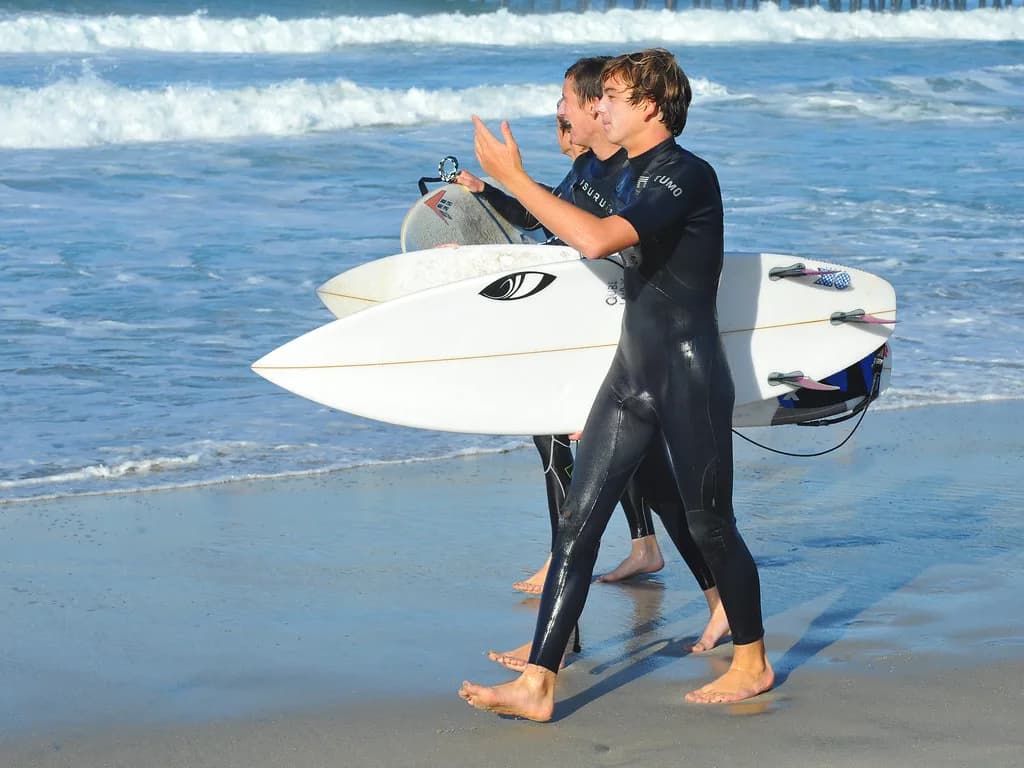
Your wetsuit slows heat loss by trapping a thin layer of water and limiting circulation against the skin. Warmer water may call for trunks, a rash guard, or a thin spring suit; cooler water usually requires a full suit, then boots, gloves, and a hood as temperatures fall. Suit needs also vary with wind, air temperature, sun, body size, cold tolerance, and how active you are.
Use water temperature as a starting point, then adjust for the whole session. A shaded dawn patrol with strong wind can feel much colder than a sunny afternoon in the same ocean temperature. See the wetsuit thickness guide for a practical range chart.
Choose thermal protection from the water temperature, then account for wind, air temperature, sun, and personal tolerance.
Cold Shock Changes the First Minutes
Sudden immersion in cold water can trigger an involuntary gasp, rapid breathing, and a spike in heart rate. That response can make a rushed paddle-out harder and becomes more serious if you enter without control of your breathing. A well-fitting wetsuit helps, but it does not remove the need to enter deliberately and stay within your experience.
If breathing does not settle, you feel chest pain, or you lose control of your hands and movement, leave the water and seek help. Surfers with heart or respiratory conditions should get individualized medical guidance before cold-water sessions.
Cold Shortens Useful Session Time
As the body cools, muscles and joints can feel stiffer, paddling becomes less efficient, and fine motor control can fade. That matters when gripping rails, fastening a leash, timing a pop-up, or making a calm decision in current. The useful session often ends before severe shivering begins.
Watch for persistent shivering, numb fingers, clumsy movement, confusion, or unusual fatigue. Those are reasons to return to shore, warm up gradually, and avoid paddling back out simply to reach a planned session length.
End the session when cold begins reducing coordination or judgment, not when the clock says you are done.
Temperature Does Not Create Bigger Surf
Swell height comes from wind transferring energy to the ocean over distance and time, then from how that swell interacts with the local seafloor and coastline. The temperature of the water at your beach does not add height to an arriving swell.
Temperature gradients can still matter indirectly. Differences between warmer land and cooler ocean help drive local sea breezes, while seasonal ocean patterns can influence weather over larger scales. That local wind may smooth, texture, or disrupt the surf depending on its direction and strength. The wind affects the waves; the water temperature itself is not changing the swell height.
Plan the Session With Temperature in Context
Check the current water temperature alongside air temperature, wind, weather, wave size, period, tide, and the time you expect to spend outside. Bring a dry layer for afterward, confirm that the wetsuit seals and moves properly, and remember that a suit that worked last month may not fit today's upwelling or seasonal change.
Quiver beach pages show water temperature and wetsuit guidance as part of the session check. Treat that guidance as a starting point rather than a guarantee of comfort, because cold tolerance and equipment condition vary by surfer.
Use current water temperature and wetsuit guidance as part of a full conditions check, then adjust for your body and gear.