
Key Takeaways
- Choose the day's conditions, not just a famous spot name, and confirm the wave pattern from shore before entering.
- Doheny and Old Man's favor slower longboard-style waves on smaller days, but rocks, crowds, and swell size still matter.
- Sand bottoms make Bolsa Chica and Blackies practical learning options, but current, closeouts, crowds, and pier hazards require attention.
- Huntington can work on small, clean days, but its exposure and current demand a more selective call than a sheltered learner break.
- A beginner-friendly location only fits when the day's height, period, wind, tide, crowd, and current are manageable.
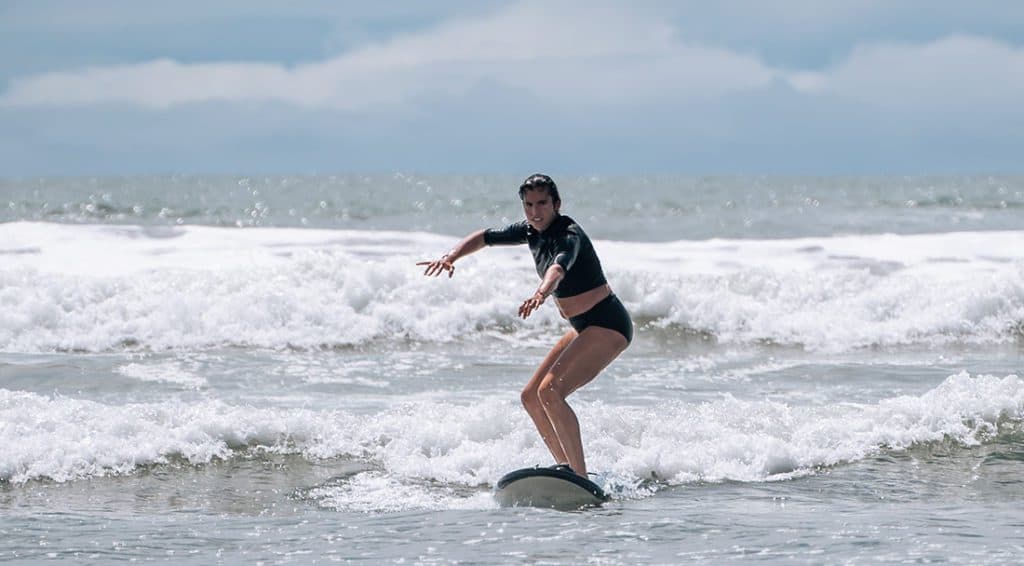
- A lesson, suitable soft-top, and basic board-control etiquette make a crowded learner lineup more manageable for everyone.
The Short Answer
Orange County has several places where beginners can find manageable waves when the swell, tide, wind, and crowd line up. Doheny State Beach is the usual first choice for soft rollers; Bolsa Chica and Blackies in Newport Beach offer sand-bottom practice; San Onofre's Old Man's is known for slower longboard waves; and Huntington Beach south of the pier can work on smaller, cleaner days. None is automatically suitable every day, so check a current report and watch multiple sets from shore.
Doheny and Old Man's for Slower Waves
Doheny State Beach in Dana Point is a classic learner option when the surf is small. The inside commonly offers soft whitewater and slower waves, but the bottom includes cobbles and rocks, the takeoff zones can be crowded, and larger south swells add speed and current. Stay clear of the harbor entrance and use the designated surf area.
Old Man's at San Onofre, just south of the Orange County line, is a common OC surf trip because its broad peaks and rolling shoulders suit longboards on smaller days. It can still be crowded, the cobble bottom is uneven, and stronger swells create long paddles and more powerful sets. Check access and parking conditions before driving.
Doheny and Old Man's favor slower longboard-style waves on smaller days, but rocks, crowds, and swell size still matter.
Bolsa Chica and Blackies for Sand-Bottom Practice
Bolsa Chica State Beach has a long sandy shoreline with room to look for a softer peak. It is still an exposed beach break: short-period windswell can close out, afternoon wind can roughen the surface, and shifting sandbars can create rip currents. Beginners should favor small days, stay near staffed areas, and avoid assuming one section behaves like the next.
Blackies, on the north side of Newport Pier, is popular with beginners and longboarders when waves are small. The pier can influence current, the lineup gets busy, and larger or lower-tide surf can become faster than its mellow reputation suggests. Keep distance from the pilings and practice in uncrowded whitewater before joining an outside peak.
When Huntington Beach Works for Beginners
Huntington Beach south of the pier can offer multiple sandbar peaks and accessible whitewater when the forecast is small and wind is light. It is more exposed than Doheny, so the same incoming swell can produce steeper waves, stronger currents, and frequent closeouts. The pier area also attracts crowds and experienced surfers.
Look for a clearly separated, smaller inside zone rather than paddling toward the main peak. Keep well away from the pier, swimmers, and other boards. If sets are breaking across the whole beach or the current keeps moving you downshore, choose a more sheltered session or take a lesson.
Huntington can work on small, clean days, but its exposure and current demand a more selective call than a sheltered learner break.
Conditions to Check Before You Go
Start with wave height, period, wind, tide, and swell direction. For early practice, look for small surf with enough space between sets to regain control. Longer period can add more force than the height alone suggests, while onshore wind can make even small surf disorganized. Tide effects vary with the sandbar or reef, so use spot-specific guidance.
- Check a current report: conditions can change between breakfast and arrival.
- Watch several sets: the quiet minute after a set is not the full pattern.
- Identify current and exits: note where surfers drift and where you can return to shore.
- Respect closures and lifeguards: posted restrictions and local direction override a general guide.
Lessons, Equipment, and Lineup Etiquette
A lesson is useful for learning board control, the day's entry and exit, rip-current recognition, and where beginners are expected to practice. Use a high-volume soft-top with a leash in good condition, and choose a wetsuit from the current water temperature rather than the season alone.
Carry the board at your side, never between you and an incoming wave. Leave generous space, do not abandon the board, and do not paddle directly into an established peak before you can turn and stop reliably. At Doheny, Blackies, Old Man's, and other busy longboard lineups, waiting your turn and avoiding drop-ins matters as much as standing up.
A lesson, suitable soft-top, and basic board-control etiquette make a crowded learner lineup more manageable for everyone.