Key Takeaways
- Go August to October for swell; summer is small, warm and fine for learning.
- Wait for 10+ seconds of period; under 7 seconds is mostly mush.
- Hurricane season is the season; after a winter front, go when wind turns northwest.
- Folly's Washout gets the most swell; Isle of Palms is gentler.
- Surf mornings with northwest wind, within two hours of mid tide.
- Trunks June to October; a 4/3 and boots December to March.
- Learn in summer, away from the pier; skip the water after heavy rain.
The Short Answer
Yes. South Carolina has about 187 miles of Atlantic coast, and most days it is 1 to 3 ft beach break over sand. The good days come from hurricane swell between late August and October, when Folly Beach can get 4 to 6 ft with a light northwest wind. The water runs from about 50 °F in January to the mid 80s in August. Check today's numbers on the South Carolina beaches page before you load the car.
Check it live
This guide is the why. The live page has today's swell, wind and tide.
South Carolina Surf Beaches →Why South Carolina surf is usually small
The coast tucks into a curve between Cape Hatteras and Florida, and the sea floor off it is wide and shallow for miles. Swell loses power crossing that shelf, so a 3 ft day here hits softer than 3 ft at Huntington.
Period tells you which days are worth it. Summer windswell runs 5 to 7 seconds and looks like close-together mush. A hurricane passing offshore sends 10 to 14 second groundswell with clean lines. The groundswell vs wind swell guide explains the difference.
Wait for 10+ seconds of period; under 7 seconds is mostly mush.
When to surf South Carolina, month by month
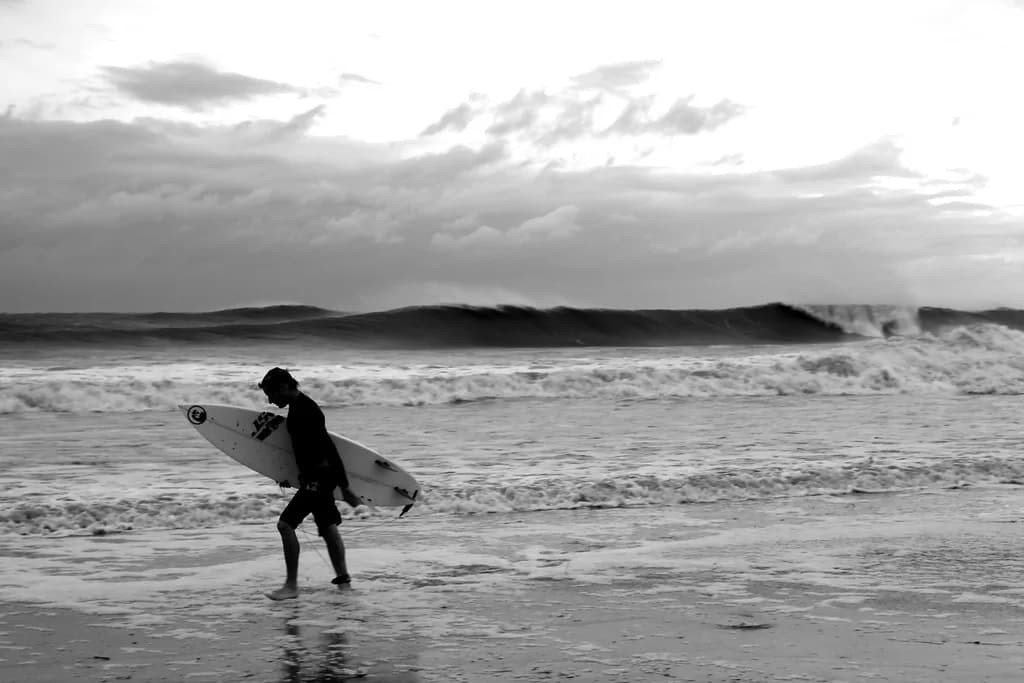
August to October is the season. Tropical systems track up the coast, the water is still in the 70s or 80s, and swell can run for several days.
November to March brings cold fronts and nor'easters. You get short, windy northeast swell, and the cleanest hours come after the front passes and the wind swings northwest.
April to July is mostly flat to knee-high, with an afternoon sea breeze. Go early. The best time to surf Folly Beach page shows where this week's windows fall.
When to surf South Carolina, month by month
Where people surf in South Carolina
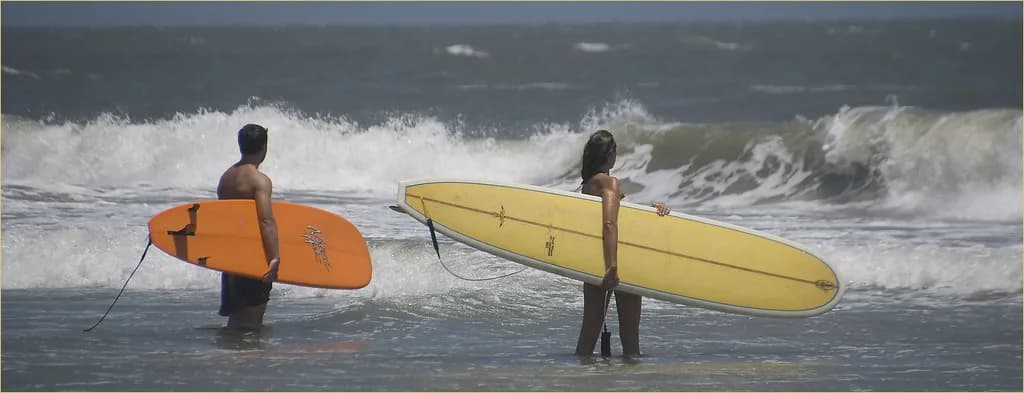
Folly Beach, 20 minutes from downtown Charleston, is the center of it. The Washout on the east end picks up the most swell, and the pier sets up sandbars on both sides. It gets crowded on any good day.
North of Charleston, Isle of Palms is a softer, wider beach. On the Grand Strand, North Myrtle Beach and Pawleys Island break around piers and shifting bars. Most of the coast is sand, so there is no reef to hit, and the bars move after every storm.
Where people surf in South Carolina
Folly's Washout gets the most swell; Isle of Palms is gentler.
Wind and tide: northwest wind, mid tide
The coast faces southeast, so west and northwest wind is offshore. Summer afternoons bring a southerly sea breeze that chops it up by noon.
The tide moves about 5 to 6 ft around Charleston, much like San Diego. A bar that peels at mid tide can close out at dead low or go soft at high. Check the Folly Beach tide chart and plan for the two hours either side of mid tide.
What to wear by water temperature
NOAA's Charleston tide station shows water near 50 °F in January and February and around 84 °F in July and August. In August that is about 10 °F warmer than La Jolla Shores.
- June to October: trunks or a rash guard.
- April, May and November: a 3/2 full suit.
- December to March: a 4/3 with boots.
Check the reading the morning you go on the Folly Beach water temperature page.
Trunks June to October; a 4/3 and boots December to March.
Learning, rip currents and rain
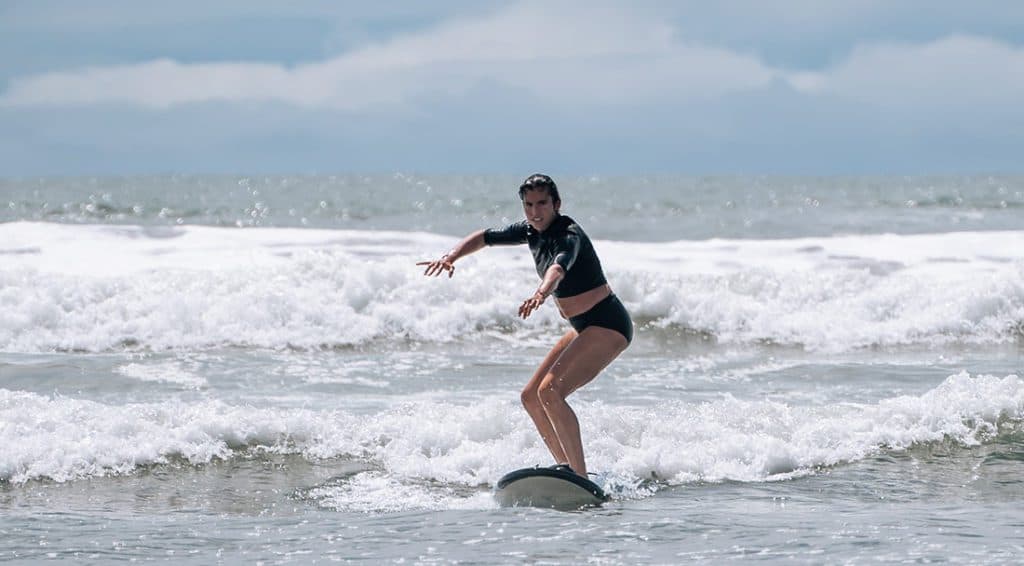
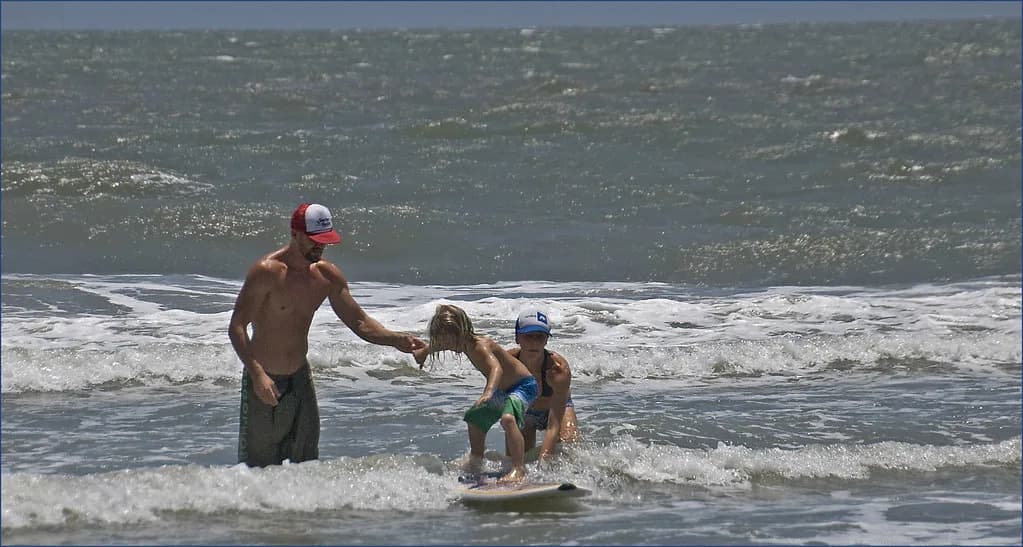
Summer's small, warm surf makes South Carolina a good place to learn. The Folly Beach beginner read and the Myrtle Beach beginner read say whether today is small and clean enough.
Rip currents form along piers and between the bars, and the National Weather Service posts a daily rip current risk for the coast. Read how to spot and escape a rip first. After heavy rain, wait and check for a posted swimming advisory. Nothing here promises a beach is safe on a given day. Watch from shore for 10 minutes before you paddle out.