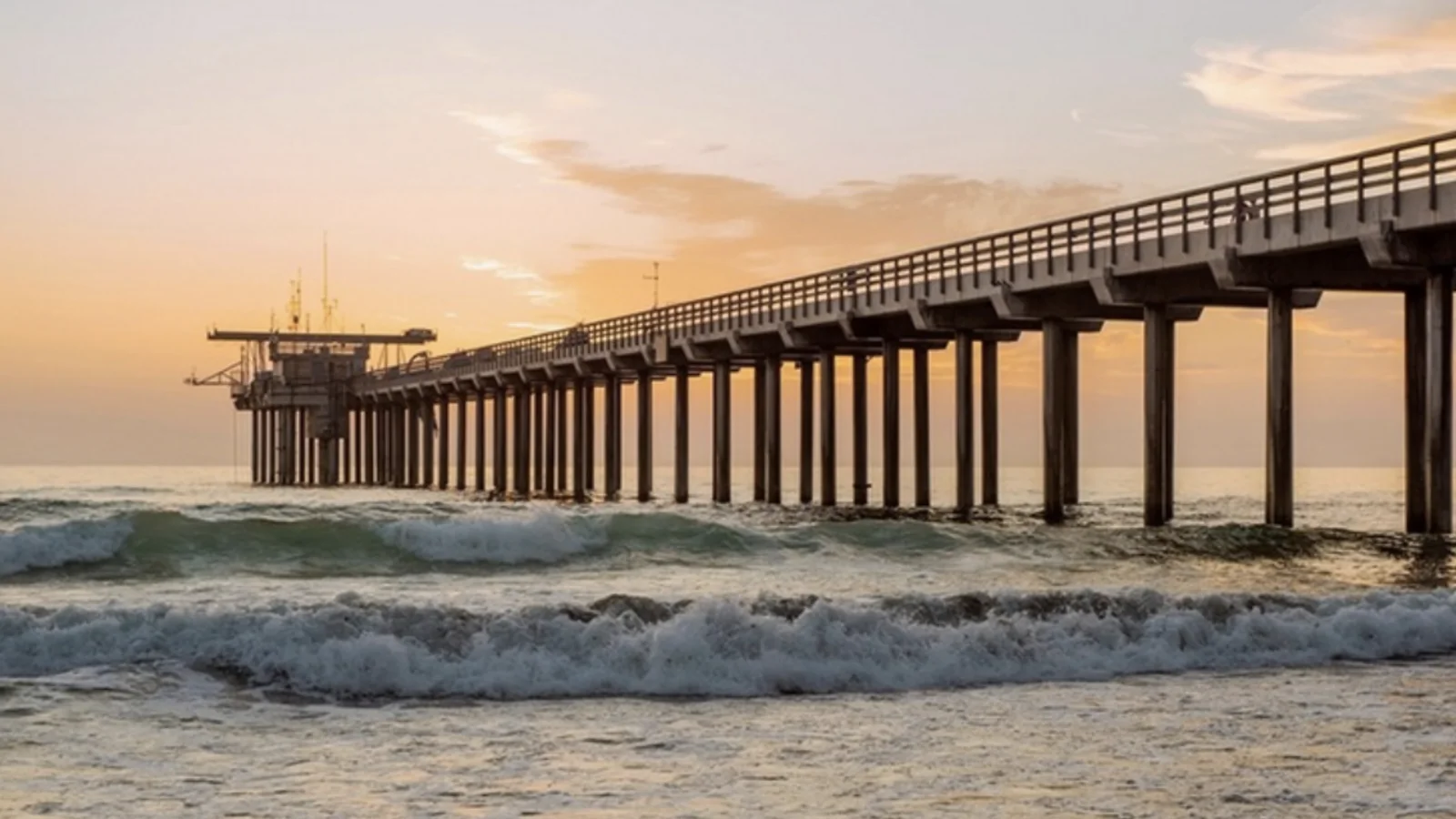
Recommendations refresh every 30 minutes based on tide, wind, and crowd telemetry from Quiver.
San Diego delivers the kind of mellow walls that make nine-footers purr. These 22 breaks offer long shoulders, patient sections, and enough face to cross-step without rushing.
Next steps
Keep planning San Diego
Use this longboard friendly guide as the filter, then jump to live spots, tides, or the seasonal window.
Long, peeling waves perfect for noseridingMellow takeoff zones with forgiving shouldersClassic surf spots with old-school vibesBest tide windows for logging sessions
Longboard-friendly breaks in San Diego
Break types, wave character, and ideal conditions for mellow log sessions.
Big Jetty is a jetty break in San Diego, CA. It is suited for intermediate-advanced surfers. Watch out for rip currents, rocks, strong currents, pollution.
Wave character
Big Jetty produces heavy, wedging waves that bounce off the south jetty wall of the Mission Bay channel entrance. The signature wave is a thick, bowling right that jacks up fast and throws a short but intense barrel. Lefts peel away from the jetty and are more workable but less exciting. The wave gets serious above 4 ft—the backwash off the rocks creates unpredictable sections and the currents intensify dramatically. On big swells, the channel current rips hard and can sweep you into the bay entrance. The sandbar configuration changes with season but the jetty provides a consistent reference point for the peak.
Best conditions
Big Jetty fires on a clean west or WNW swell in the 4-8 ft range with 14+ second period and light offshore winds. The wedge effect is most pronounced on a dropping tide from high to mid—the backwash off the rocks amplifies the wave face and creates the bowling takeoff. Winter is prime season. The best sessions happen on early morning glass with a medium-period WNW swell wrapping into the 265-degree exposure. Avoid it on big south swells, which push water straight into the jetty and create chaotic, unsurfable conditions.
Crystal Pier is a jetty break in San Diego, CA. It is suited for intermediate-advanced surfers. Watch out for rip currents, rocks, strong currents, pollution.
Wave character
Crystal Pier creates a reliable focal point for swell energy, producing peaks on both sides of the structure. The south side tends to get more defined lefts that peel away from the pier, while the north side offers rights and a mix of peaks. The pier pilings create refraction that can organize otherwise messy swells into surfable waves. It works on a wide range of swells—W, WNW, NW, and even SW summer swells. Overhead-plus days produce heavy waves close to the pilings that demand precise positioning. The inside is forgiving for beginners, but the outside peak near the pier head can get serious.
Best conditions
Crystal Pier works best on a clean west or WNW swell in the 3-6 ft range with light offshore east winds and a mid-tide. The pier focuses swell energy and creates more defined peaks than the open beach sections of PB. Fall is the prime season—summer sandbars are still intact, crowds thin after Labor Day, and WNW swells start filling in. Morning glass before the sea breeze kicks in around 11 AM is the daily window. On solid winter swells above 6 ft, the wave gets heavy near the pilings and is best left to experienced surfers.
Marine Street Beach is a beach break in San Diego, CA. It is suited for beginner-intermediate surfers. Watch out for rip currents, pollution.
Wave character
A cobblestone-and-sand bottom that shifts with each swell, so the sandbars rearrange frequently. When it's dialed, you get surprisingly punchy peaks with short, fast walls—mostly lefts but the occasional right connects on higher tides. The 240-degree aspect picks up west and southwest swells well. Head-high days produce the best shape; overhead swells tend to close out across the shallow inside bar. Watch for the cobblestones on the inside—they make the shorebreak unforgiving.
Best conditions
Marine Street lights up on medium-period west to southwest swells in the 3-5 foot range. You want a moderate tide (3-4 ft) to keep the inside cobblestones submerged and the sandbars working. Light east or northeast winds groom the face in the morning. Avoid big winter NW swells—the angle is too direct and the wave closes out. The sweet spot is a combo swell with some south energy pushing peaks off the cobblestone shelf.
**Mission Beach** serves as central San Diego surfing bellwether rated 6/10. Nearly 2-mile stretch from South Mission Jetty to Pacific Beach offers year-round beachbreak.
Wave character
Jetty wedges; mid tide steadies the shape. Onshores wreck afternoons—go early
Best conditions
Mid tide, early morning before onshores, jetty creates wedges
Beachbreak at South Mission with a jetty that creates wedging waves. Big parking lot fills with volleyball crowds mid-day. Mid tide steadies the wave shape. Onshores wreck afternoons so go early for best conditions. The jetty rip runs hard on overhead pulses - keep eyes on the current.
Wave character
Jetty wedges; mid tide steadies the shape. Onshores wreck afternoons—go early
Best conditions
Mid tide, early morning before onshores, jetty creates wedges
New Break (Nubes) is a beach break in San Diego, CA. It is suited for beginner-intermediate surfers. Watch out for rip currents, pollution.
Wave character
A forgiving beach break compared to the heavy reef slabs nearby. The 245-degree aspect catches west and southwest swells, and the sandy bottom produces shifting peaks that break both left and right. Waves are generally more playful and less critical than the main Sunset Cliffs setups—ideal for working on turns rather than survival surfing. On solid SW swells, a defined left develops along the south end of the break. The wave has more push than it looks from the cliff—don't underestimate the paddle out through the shorebreak.
Best conditions
New Break works best on clean west-southwest swells in the 3-6 foot range with light offshore winds from the east-northeast. A mid-to-high tide (4-5 ft) smooths out the inside section and keeps the waves from dumping on the sand. This spot particularly shines on combo swells where SW energy wraps in while NW swell is fading—you get clean, organized peaks without the heavy close-outs. Avoid big NW storm swells, which wash through the break without much shape.
**Ocean Beach** delivers San Diego's most consistent surf rated 8/10 but most dangerous beach. Receives all swell directions 200-310° (center 270°) with east offshore winds (90°).
Wave character
Sandbars near pier handle more size; kelp can clean up winds. Morning offshore on Santa Ana days = go time
Best conditions
Morning offshore Santa Ana days, sandbars near pier handle size
Powerful beachbreak near the OB Pier with shifting sandbars that can handle serious size. The pier creates banks that often produce the best waves in the area. Morning offshore winds during Santa Ana conditions make for epic sessions. Be mindful of the jetty and pier - both create strong rips when the swell is up.
Wave character
Sandbars near pier handle more size; kelp can clean up winds Morning offshore on Santa Ana days = go time
Best conditions
Morning offshore Santa Ana days, sandbars near pier handle size
Osprey Point is a point break in San Diego, CA. It is best suited for intermediate surfers. Watch out for rip currents, rocks, sea urchins, pollution.
Wave character
A right point break that wraps around the rocky headland on solid west-to-southwest swells. The 250-degree aspect needs swell to be pushing in from the WSW to really light up. When it's on, the right peels along the reef shelf for 50-75 yards with a steep, fast wall. The takeoff is critical—a late drop over shallow reef with urchin-covered rocks below. Inside section gets shallow and can shut down abruptly. The occasional left peels off the peak on higher tides but is shorter and less defined.
Best conditions
Osprey Point needs a solid WSW-to-W swell in the 4-8 foot range to start wrapping around the point. Best on a mid-to-low incoming tide (2-3.5 ft) which exposes enough reef for the wave to break with shape but keeps the inside rideable. Light ENE offshore winds are essential—any side-shore texture ruins the wave face on the takeoff. This spot fires maybe 15-20 days per winter when everything aligns. It's worth watching from the cliff first to time the sets and identify the takeoff zone before paddling out.
PB Point is a point break in San Diego, CA. It is best suited for intermediate surfers. Watch out for rip currents, rocks, sea urchins, pollution.
Wave character
A rocky right-hand point break that wraps around the north end of Pacific Beach near False Point. The 270-degree due-west aspect catches any westerly swell energy. On solid W-NW swells, a well-defined right peels along the reef shelf with a steep, hollow section on the takeoff that mellows into a workable wall. The wave has good push and rewards committed, vertical surfing. Inside section runs over rocks and gets shallow—kick out before it pinches. Lefts off the peak are short but occasionally fun on higher tides.
Best conditions
PB Point needs a solid W to NW swell in the 4-7 foot range to produce quality rights. A mid-tide around 3-4 feet gives the best shape—too low and the reef is dangerously shallow on the inside, too high and the wave gets fat and mushy. Light east offshore winds are essential for the morning glass. This spot handles NW swell better than many SD breaks thanks to the due-west aspect. It's particularly good on NW swell with longer periods (14+ seconds), which wraps around the point cleanly.
Garbage at Sunset Cliffs is an exposed reef with left and right peaks. It lights up during winter west and northwest swells and is best surfed at low to mid tide. Access involves scrambling down a cliff to a rocky beach; the wave is powerful with strong currents and is better for experienced surfers.
Wave character
Position yourself near the reef for the steepest take-offs; aim for the outside peaks that wrap into the cove. At low tide the wave gets hollow and fast.
Luscombs Point is a left-handing reef at Sunset Cliffs that produces long, powerful walls during west swells. Access is via a fenced point where surfers climb down the rocks and jump off a ledge; timing your entry with the incoming waves is critical. The wave is fast and shallow, so it's suited to advanced surfers.
Wave character
Sit deep on the point and watch for the set waves that wrap into the reef. Paddle hard to catch the fast take-off and stay high on the wall to make sections.
Best conditions
Low to mid tide, light east wind, 5–8 ft W–NW swell.
**Sunset Cliffs** features multiple reef breaks along Point Loma rated 7/10 with numerous named spots (Luscomb's Point, Garbage Beach, New Break, Abs, Osprey).
Torrey Pines State Beach is a beach break in San Diego, CA. It is suited for beginner-intermediate surfers. Watch out for rip currents, pollution.
Wave character
The main surf zone is on the north side of the beach—look for the red/yellow boundary flag separating surfers from swimmers. Beach break peaks shift with sand movement, so scan for 5-10 minutes before paddling out. Best waves typically form near the middle of the surf zone where sandbars build up. Waves range from fun 3-footers to solid 6-8 foot faces on bigger swells. The break is forgiving for intermediates but can produce heavy shorebreak on south swells. Works best on W-NW swells with light offshore winds (east/Santa Ana).
Best conditions
West to northwest swells at 3-6 feet with east or light northeast winds. Mid to low tide opens up the sandbars and keeps the shorebreak manageable. Winter brings the most consistent surf, but fall Santa Ana wind events produce the cleanest conditions of the year. Summer south swells can be fun but tend to close out on bigger days.
Longboard and fish heaven with soft, rolling waves and cruisey shoulders. Best on mid to high tide with small W/NW or combo swells. The parking lot fills late morning but has decent turnover. Gentle vibe overall, though watch for drifting learners. Perfect spot for a mellow session on a small day.
Wave character
Choose Tourmaline for soft rolling waves, not crowded bigger sets or windy texture.
Best conditions
Tourmaline is a strong progression and longboard profile, with beginner use limited to small soft windows and controlled boards.
Log in 15 seconds(optional)
Wave Quality7/10
Crowd4/10
Overall8/10
Logging once helps tune San Diego picks.
Frequently Asked Questions
About surfing in San Diego
Great longboard spots in San Diego include Marine Street Beach, Mission Beach (Central), New Break (Nubes). Look for peeling point breaks and gentle beach breaks with long shoulders.
Ideal longboard waves have gentle shoulders, a mellow takeoff, and long walls to trim. The best spots feature point breaks or sandbars that create peeling waves.
Check it, surf it, log it
Check the forecast, surf the session, log what happened — and build the record you'll compare every next call against.