Best Longboard Waves in Florida
Florida longboarding is about reading small windows well. Clean waist-high surf can be a better call than a bigger, windier beachbreak day.
Where Florida works best
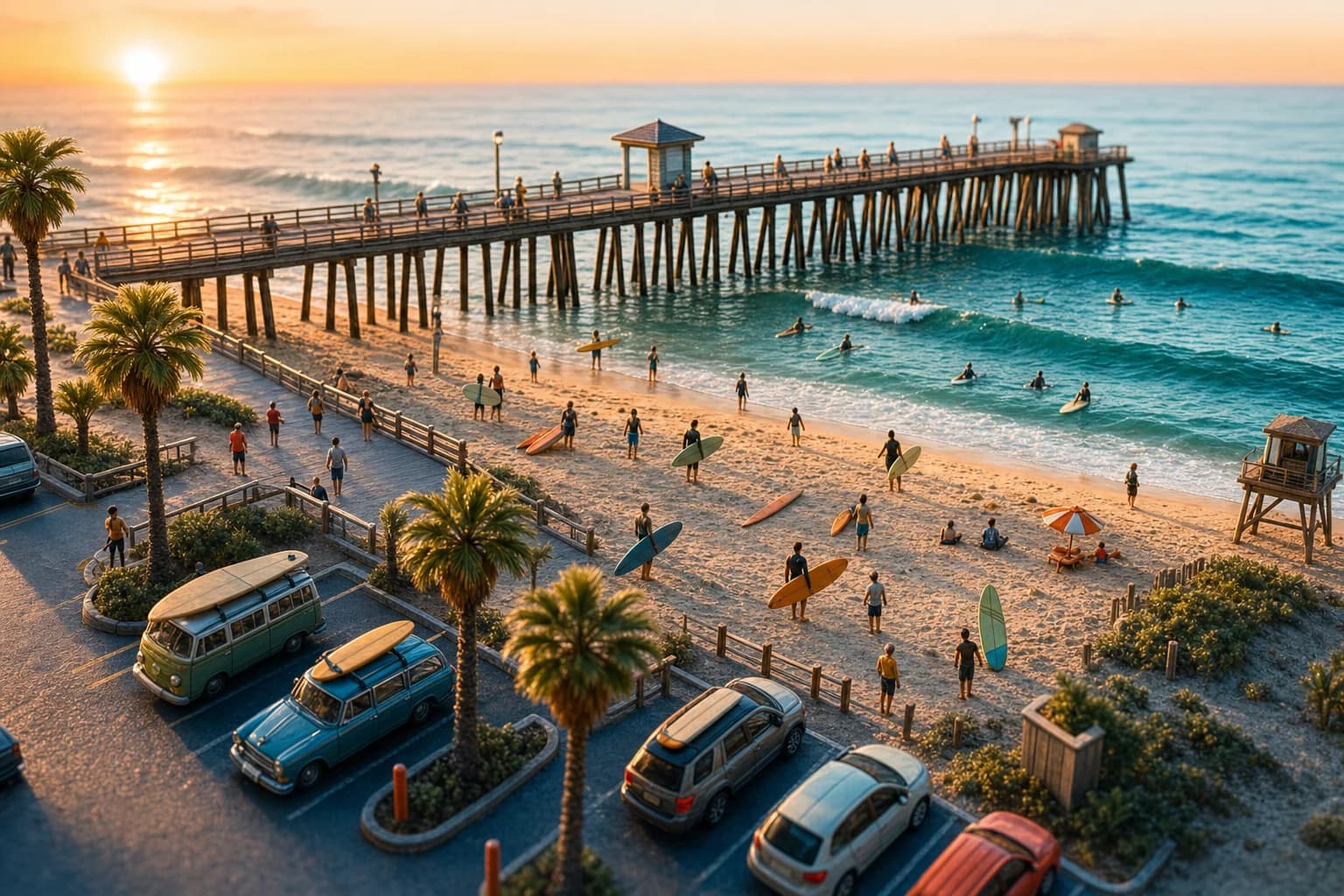
Cocoa Beach and mellow Atlantic beachbreaks are the main longboard checks. Piers and boardwalk zones help you read shape, drift, and crowd before you unload the log.
Best conditions to watch for
Look for light morning wind, small-to-moderate easterly swell, and enough tide to soften closeouts. Hard onshore wind can erase a longboard window fast.
Log vs mid-length call
Bring a log for small, clean peelers and foamier summer mornings. A mid-length or fish is better when the surf has push but the sections are too fast for classic trim.
Local read before you drive
Check cams before committing to a drive. Florida can look fun for one tide window and then flatten or blow out before lunch.
Nearby backup spots
Keep planning
Frequently Asked Questions
About surfing in Florida
- Florida can be a strong longboard zone when the swell, tide, and wind line up. Use this guide for the local pattern, then check Quiver before you drive for the freshest conditions.
- Look for light morning wind, small-to-moderate easterly swell, and enough tide to soften closeouts. Hard onshore wind can erase a longboard window fast.
- Bring a log for small, clean peelers and foamier summer mornings. A mid-length or fish is better when the surf has push but the sections are too fast for classic trim.
- Start with Cocoa Beach, New Smyrna, Ponce Inlet, Jacksonville Beach when they match your skill level. Treat named spots as a planning list, not a guarantee that every break is right today.
Make the call with Quiver
Use the page context for planning, then open Quiver for live surf conditions, best windows, tide risk, and session logging.
